CADSFS · The most powerful software on the market
Acoustic simulation and room design — from geometry to standards compliance.
A single environment to model in 3D, predict the sound field, compute ISO 3382 parameters, solve insulation with a lab-validated engine, check standards compliance and compare against measurement. From concept to construction.
Lab-validated engines · ISO 3382 · ISO 717 · ISO 12354-1 · ASTM E413 · and more. 10 languages · AI integration · Windows / Linux / macOS
Download
The problem it solves
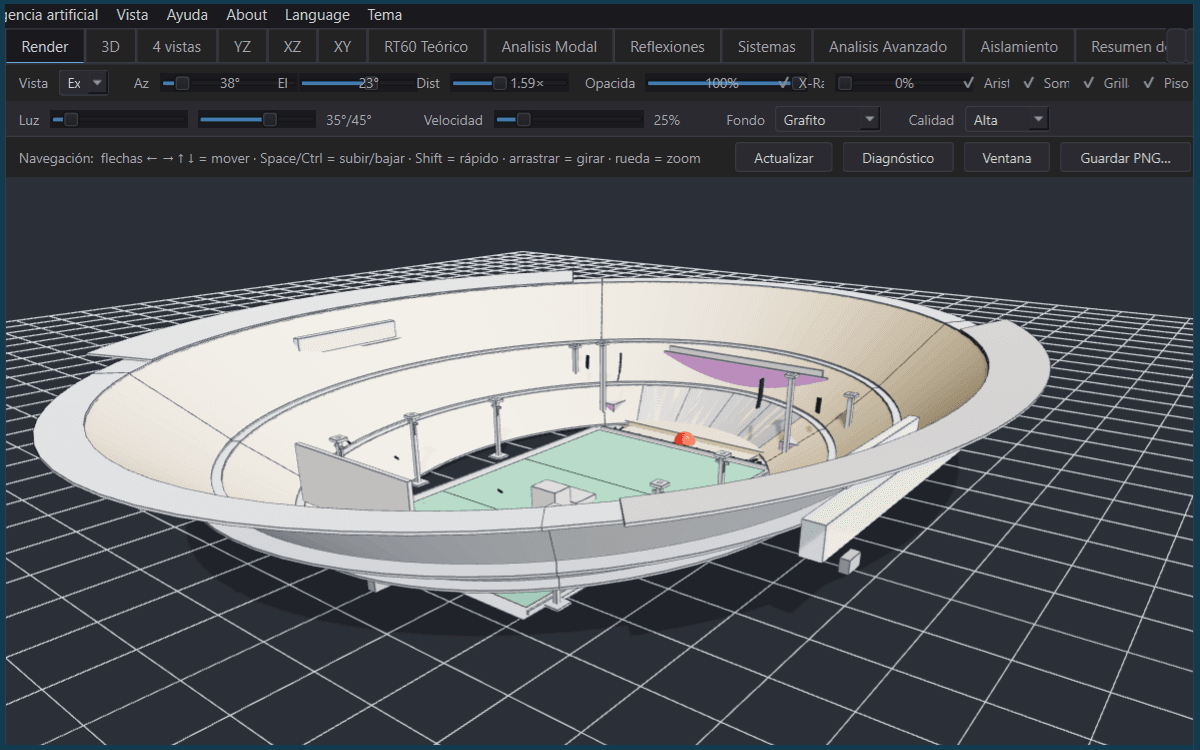
An acoustics project has to answer five questions: how the room will sound, how much noise passes through the walls, what sound system is needed, whether the whole meets the country's code, and whether the prediction matches what is later measured. Today that takes four separate programs, and every hand-off is a chance for something to be lost.
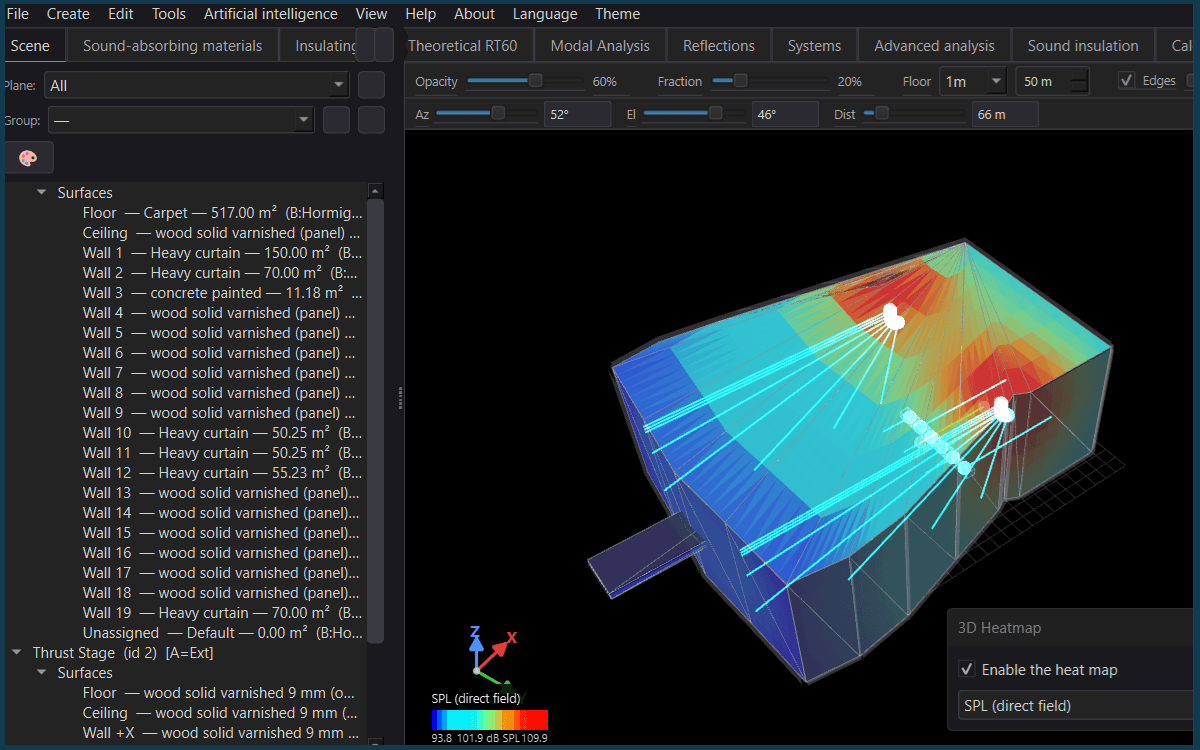
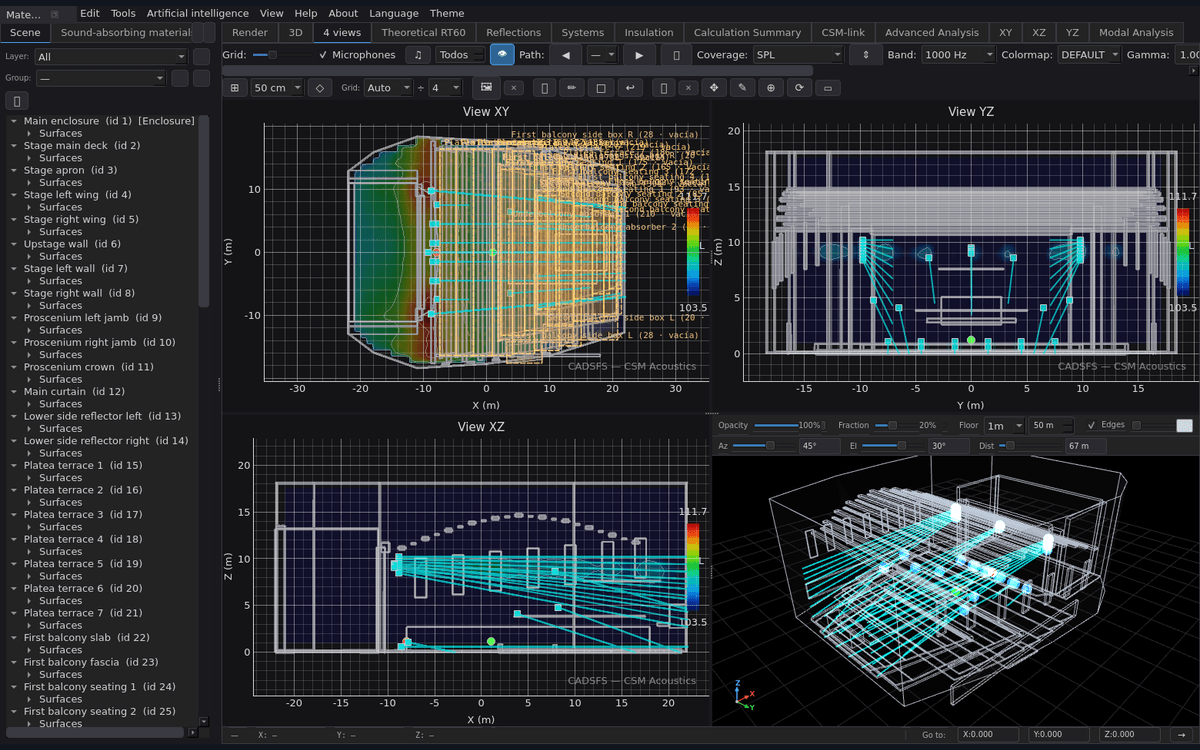
CADSFS does all five on the same model, in a single file. It is not an integration of purchased modules: it is a program written as one piece, where the wall that defines the room's volume is the same one computed for insulation and the same one the sound-system rays hit. And while you draw, the reverberation time, the Schroeder frequency and the modal ratios recompute in real time.
Change one dimension and all five answers update.
What sets it apart
It covers the whole spectrum
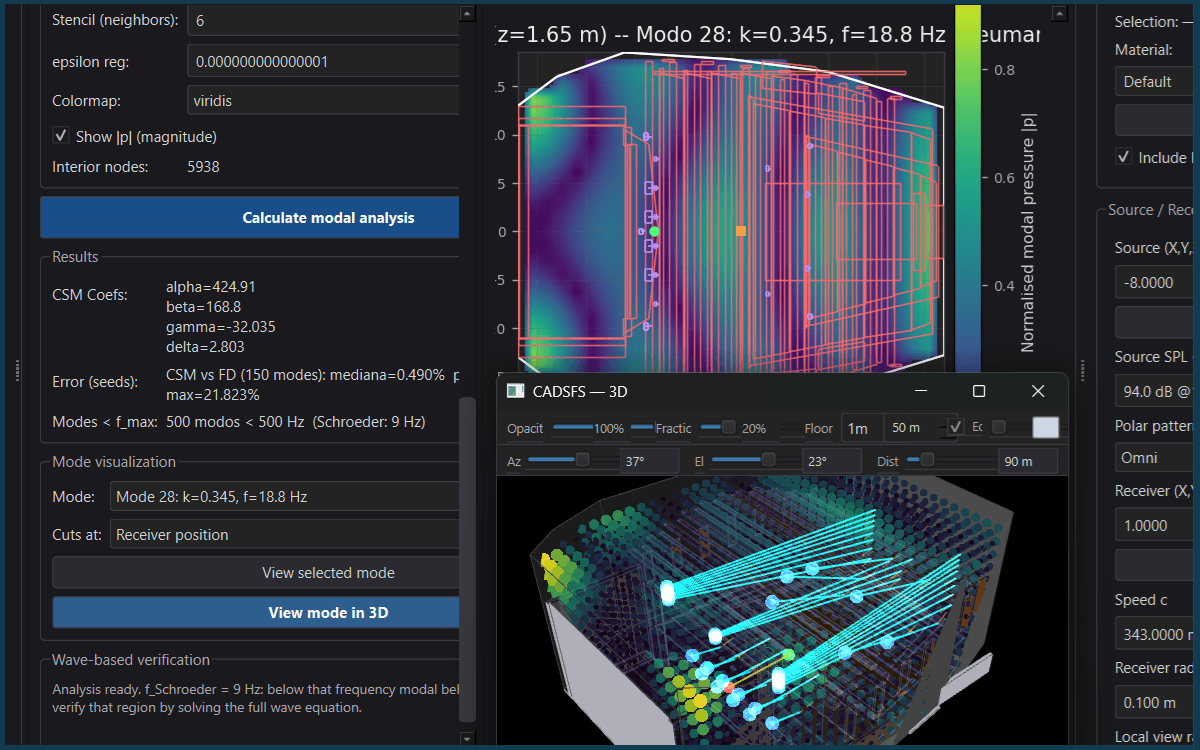
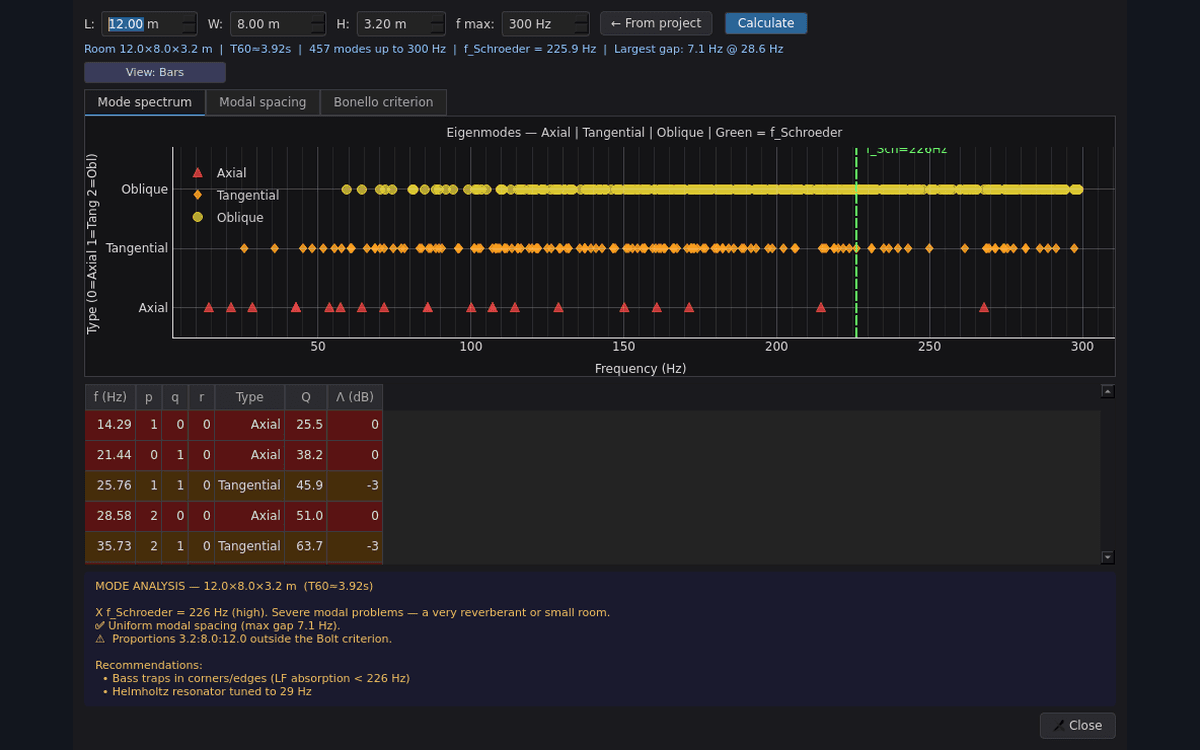
Below the Schroeder frequency a room is a box of modes, not a space of reflections. Its hybrid engines solve each region with the right method —wave-based in the low end, geometric in the high end— instead of forcing a single one. The first software to account for modes across every model, and not only in level but in time as well.
Exact diffraction, not approximate
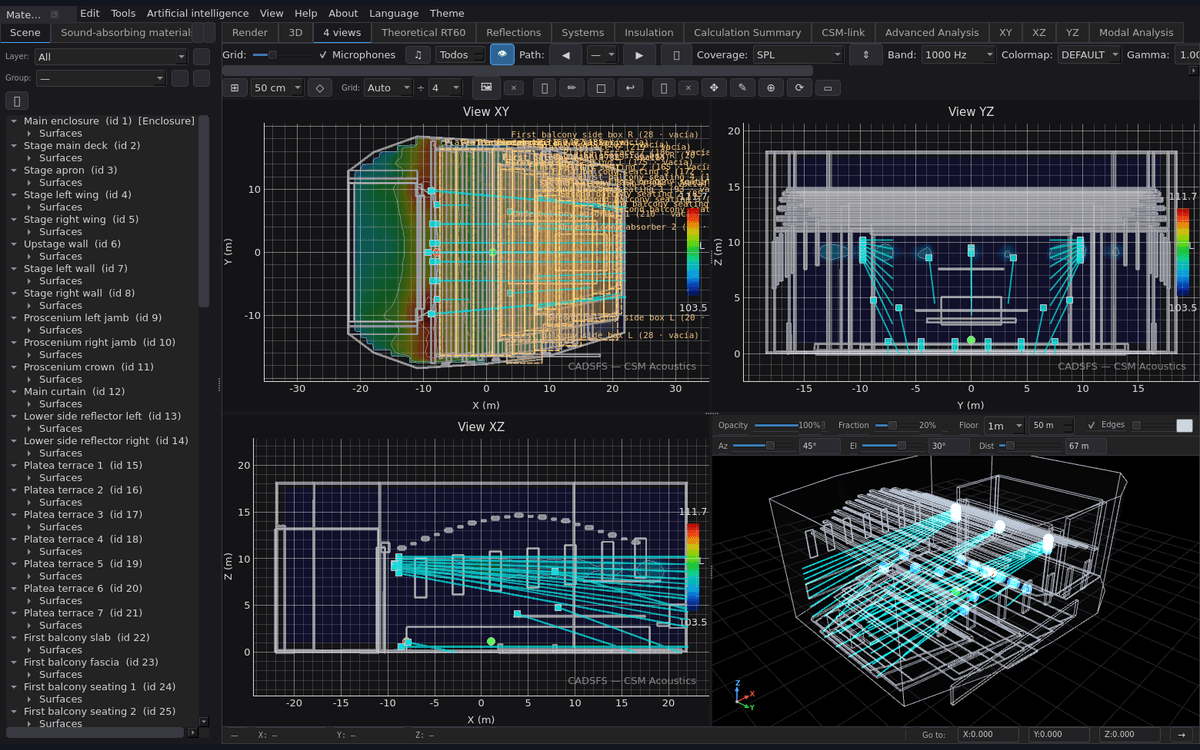
A low-frequency wave does not stop at an obstacle: it wraps around it. Six of its seven engines solve diffraction with the exact Biot-Tolstoy solution, not the approximation the others use.
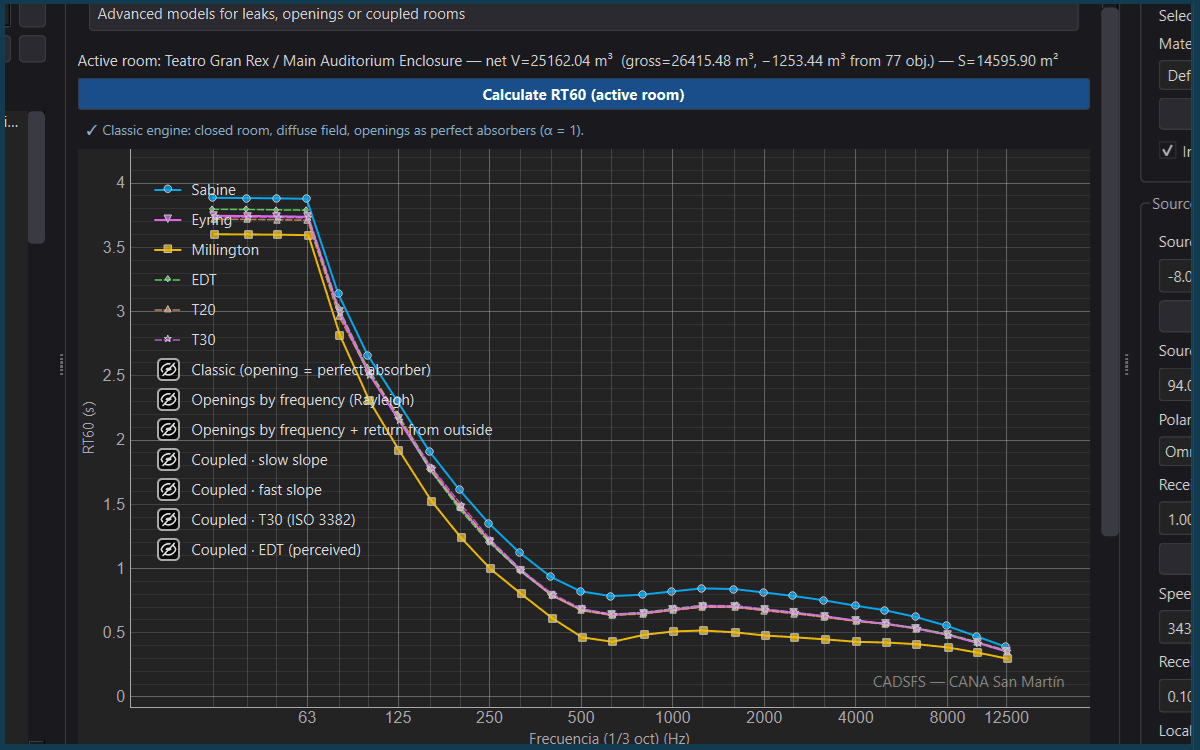
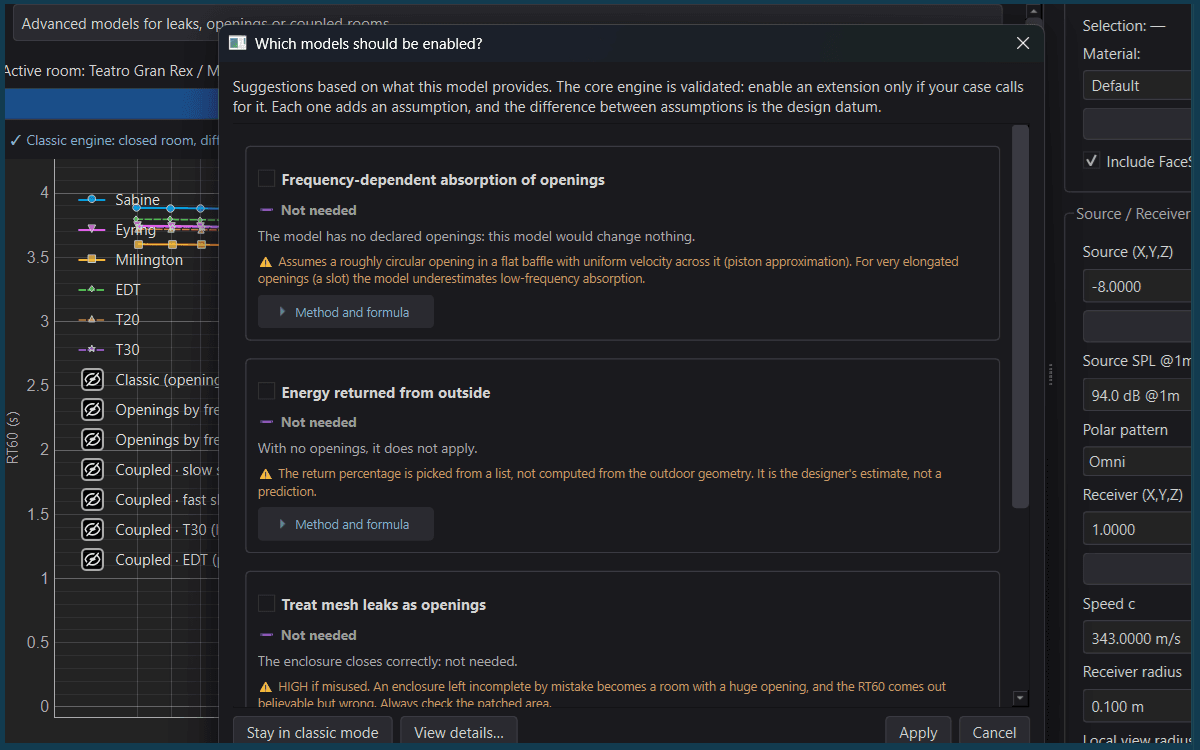
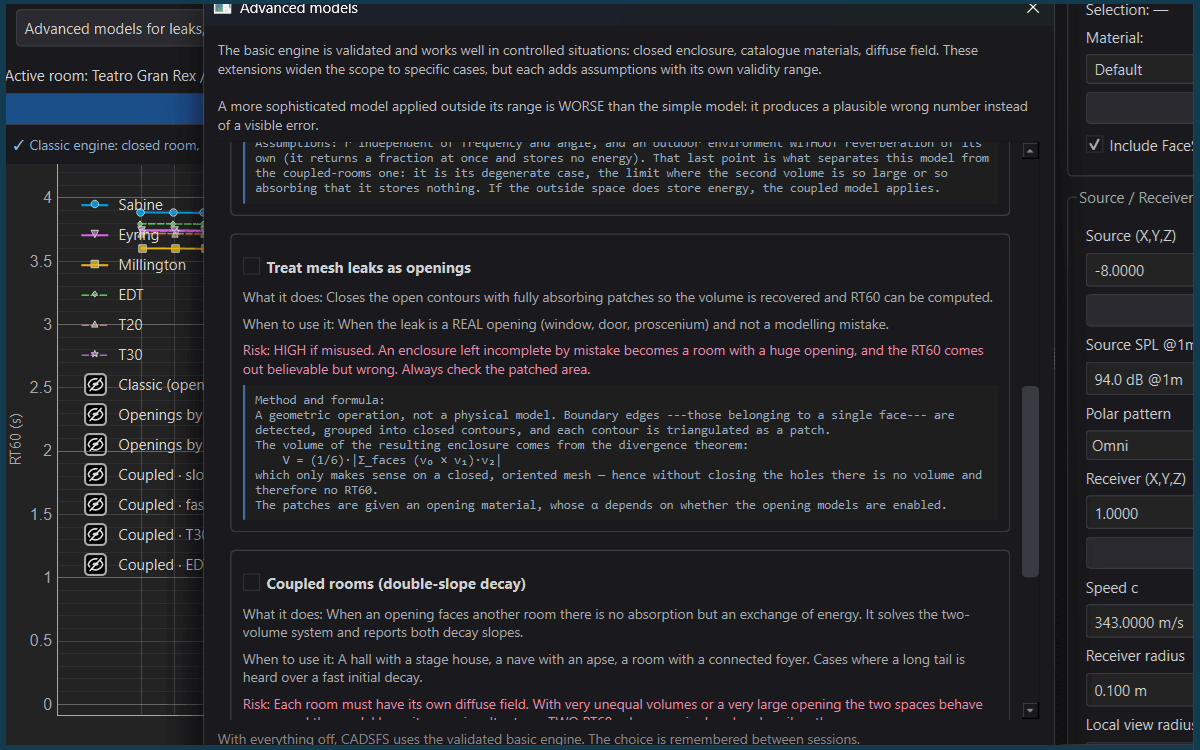
Coupled rooms
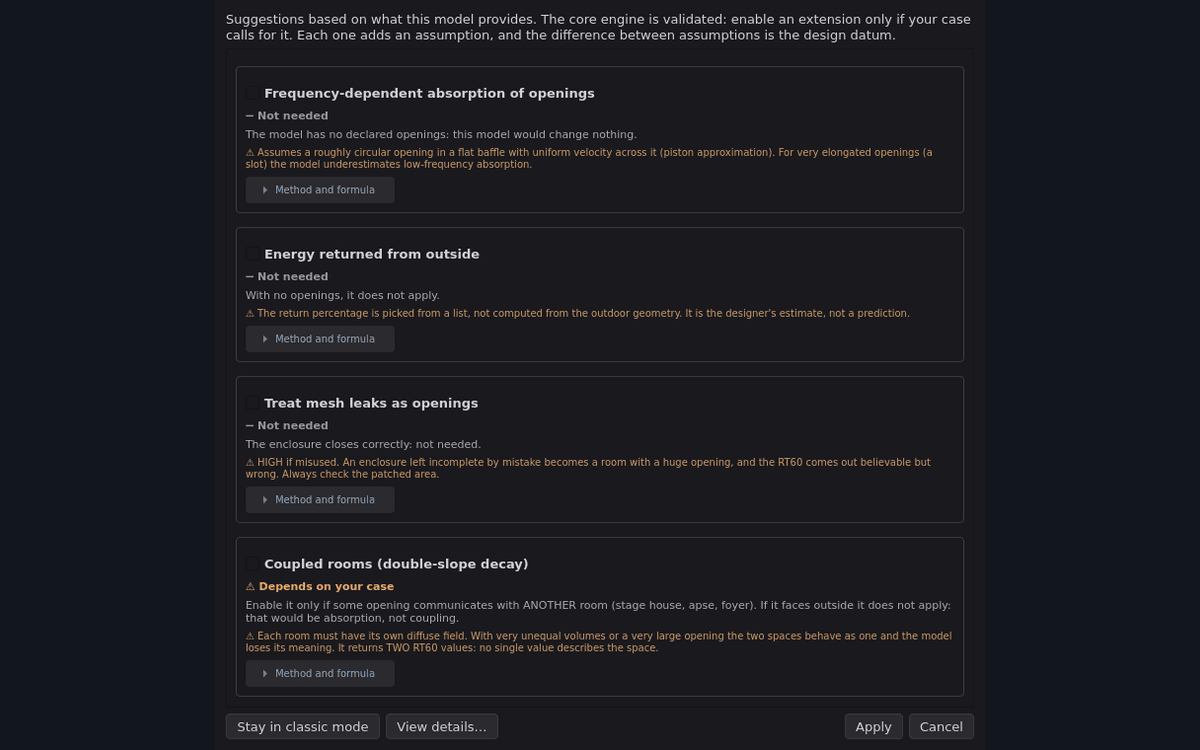
Two connected volumes —a theatre with its stage house, a hall with its lobby— do not have one reverberation time, they have two. CADSFS solves them by eigenvalues and detects the coupling on its own, from the geometry.
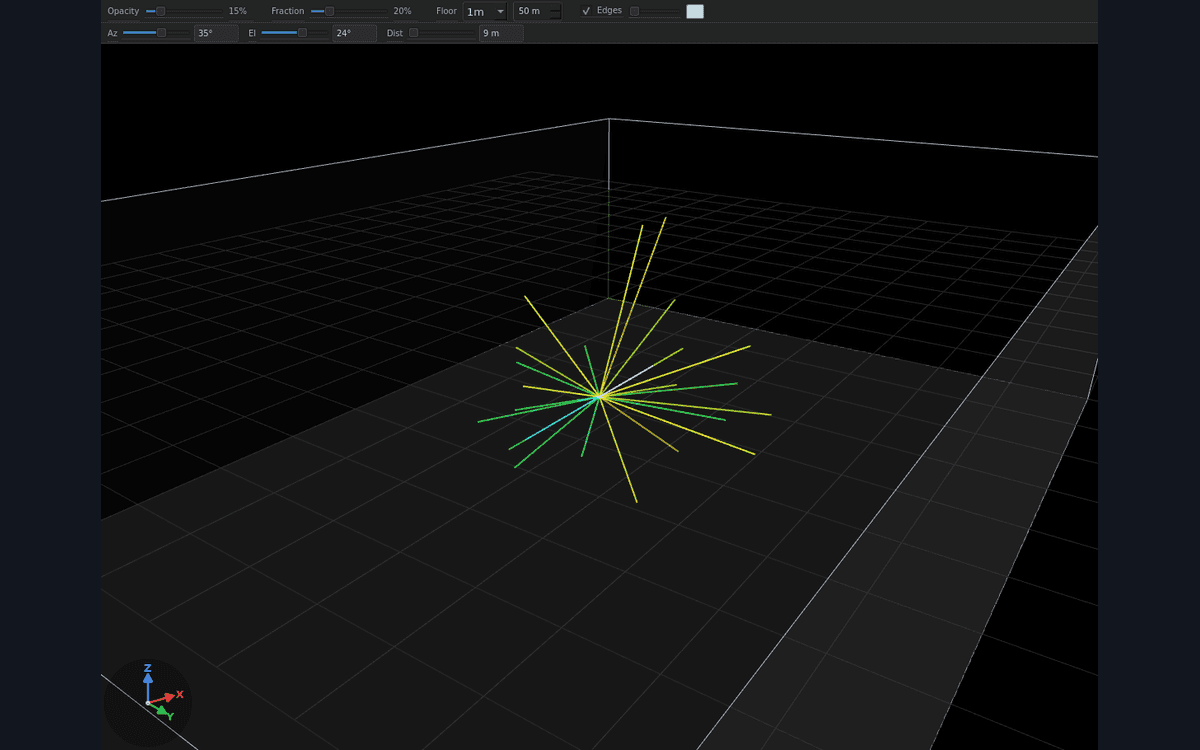
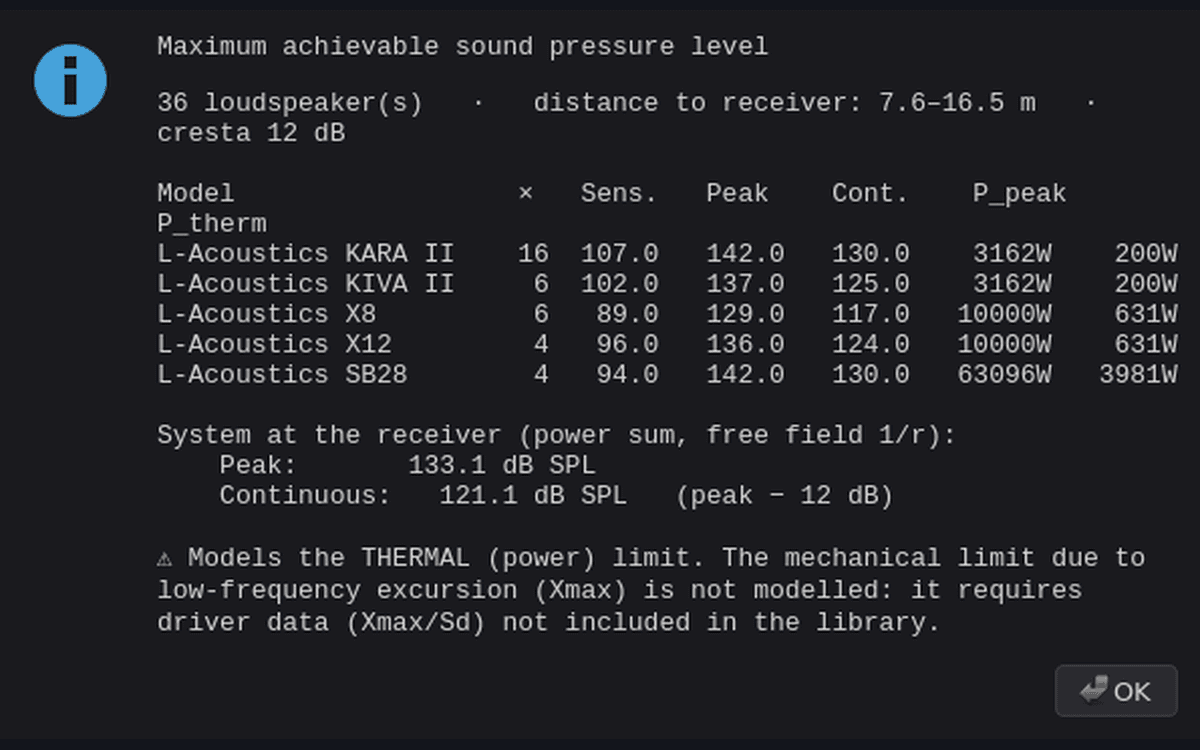
Array nulls are real
The nulls measured in an array are not infinite: they run between 10 and 20 dB. A configurable coherence factor predicts the ones you will actually measure, not the ones theory promises.
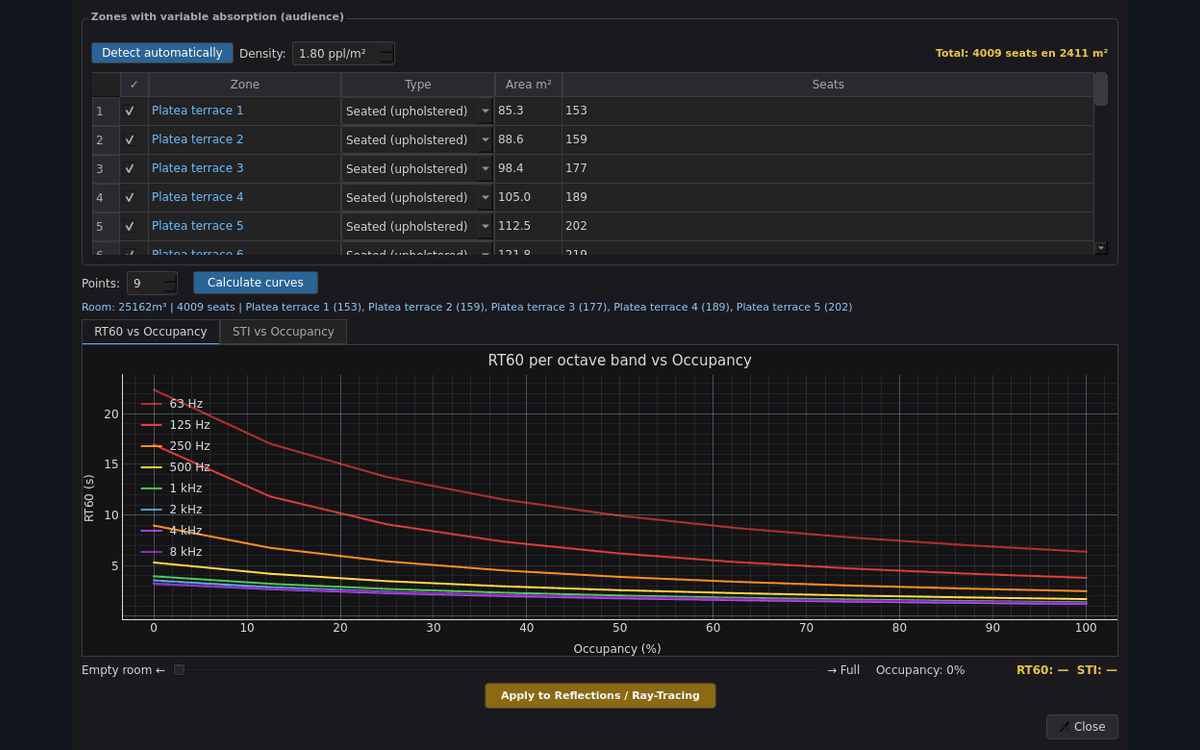
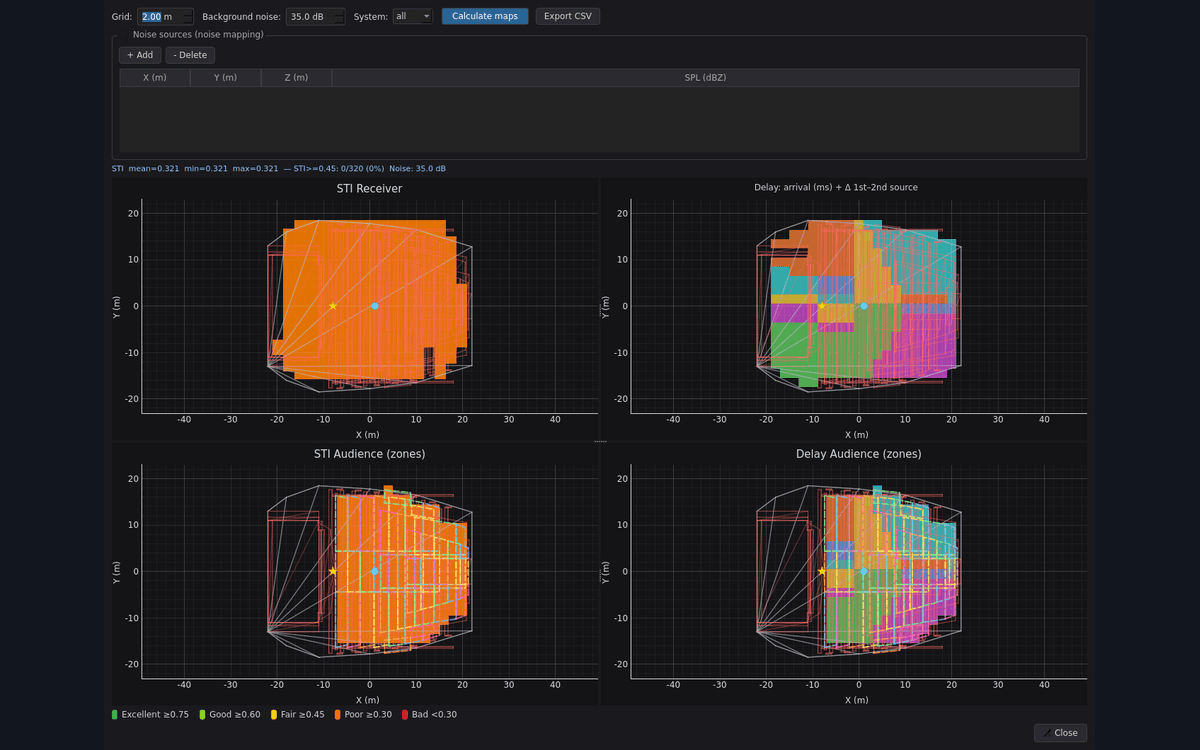
Audience absorption
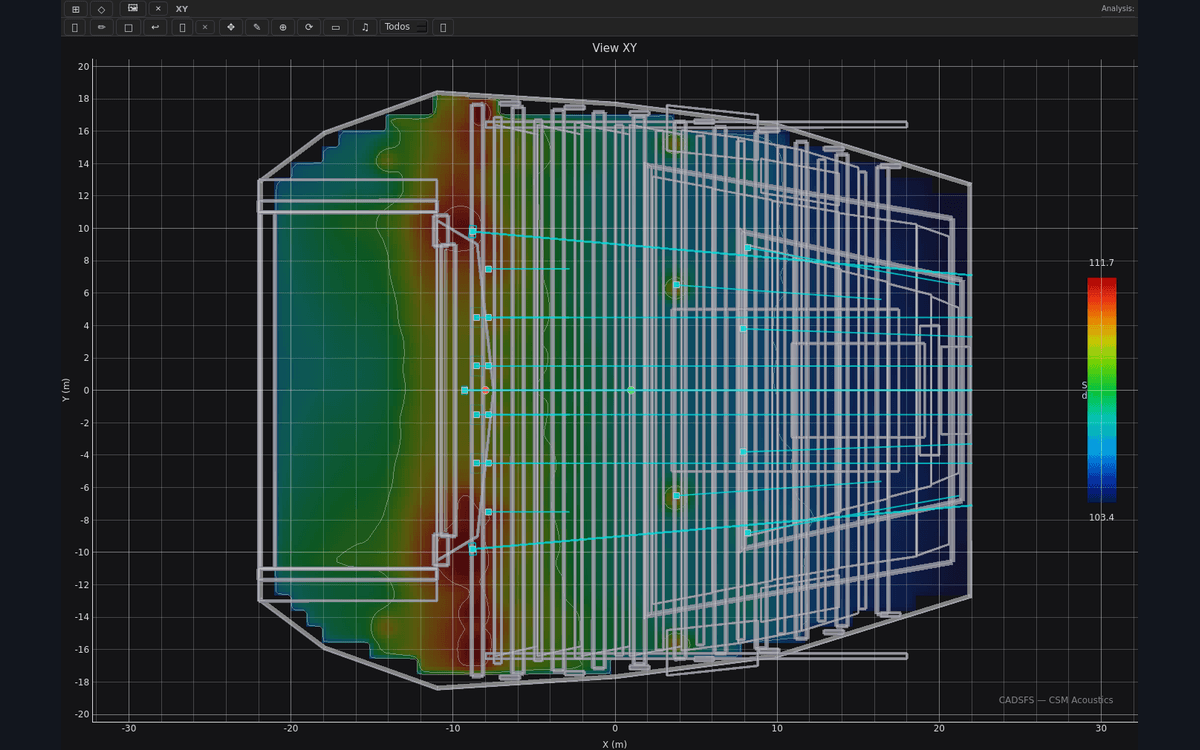
Sound grazing over the audience's heads loses energy in a narrow low-frequency band. CADSFS computes it point by point, over the system's direct sound — something no other program models.
What the obstacle blocks
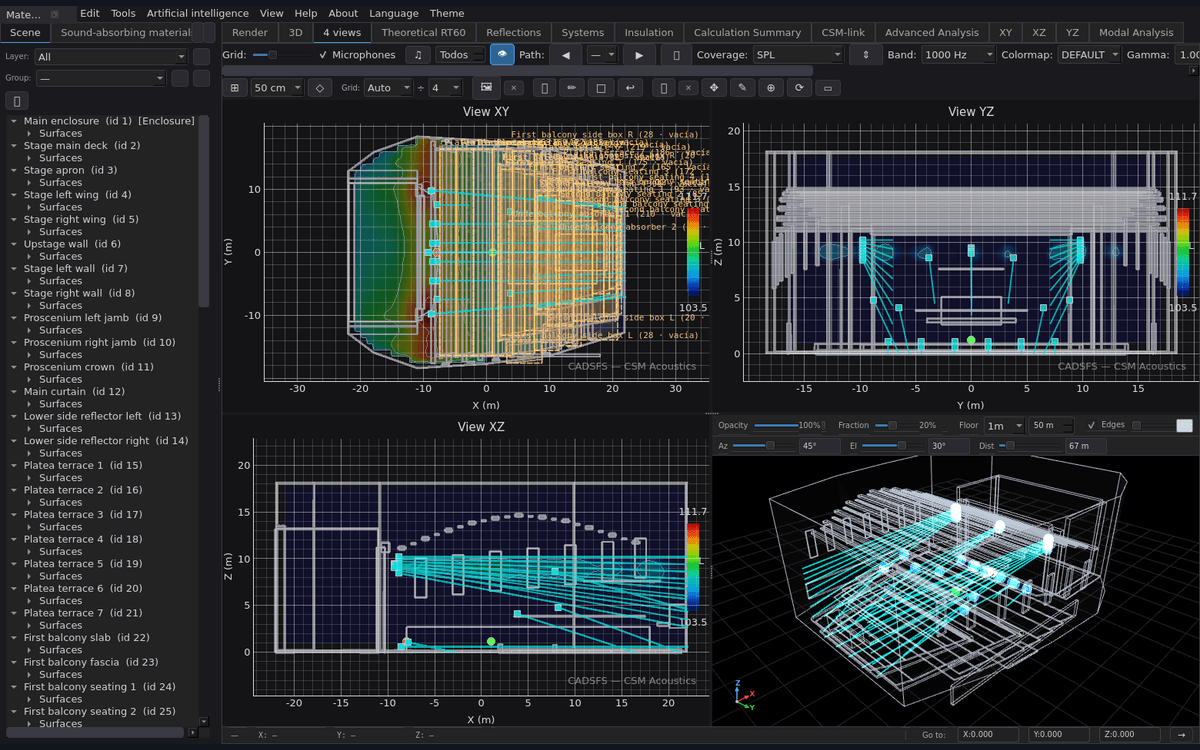
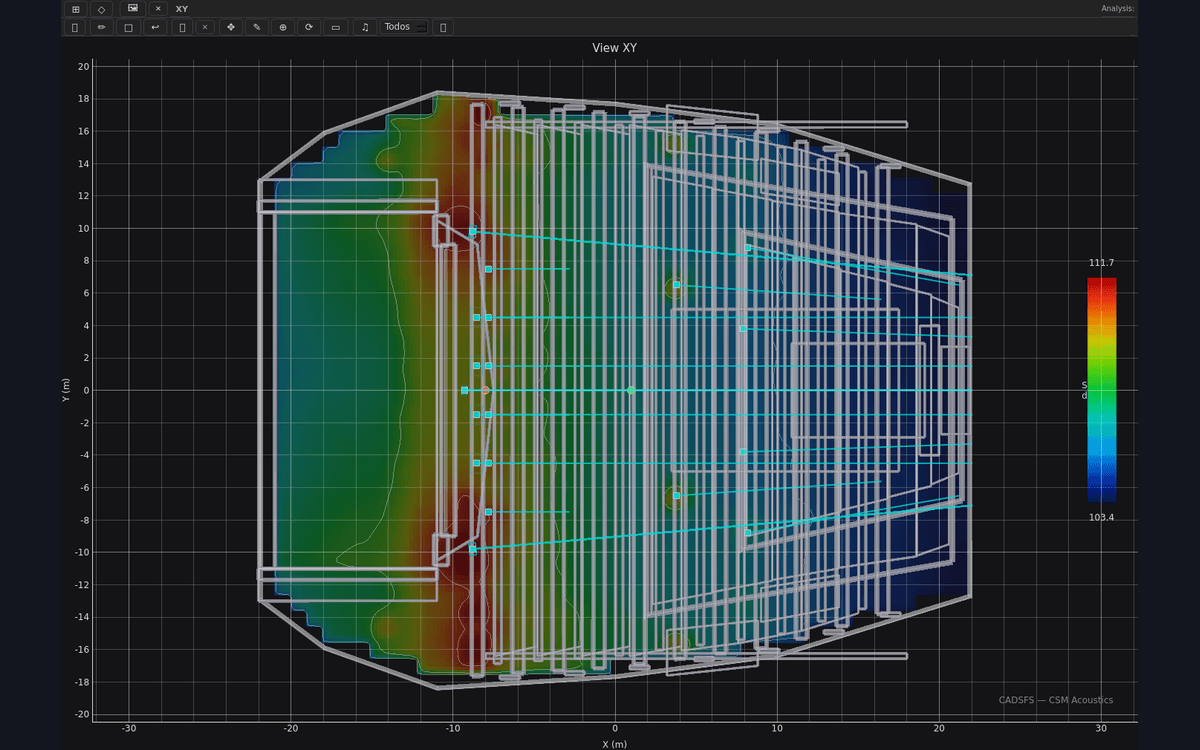
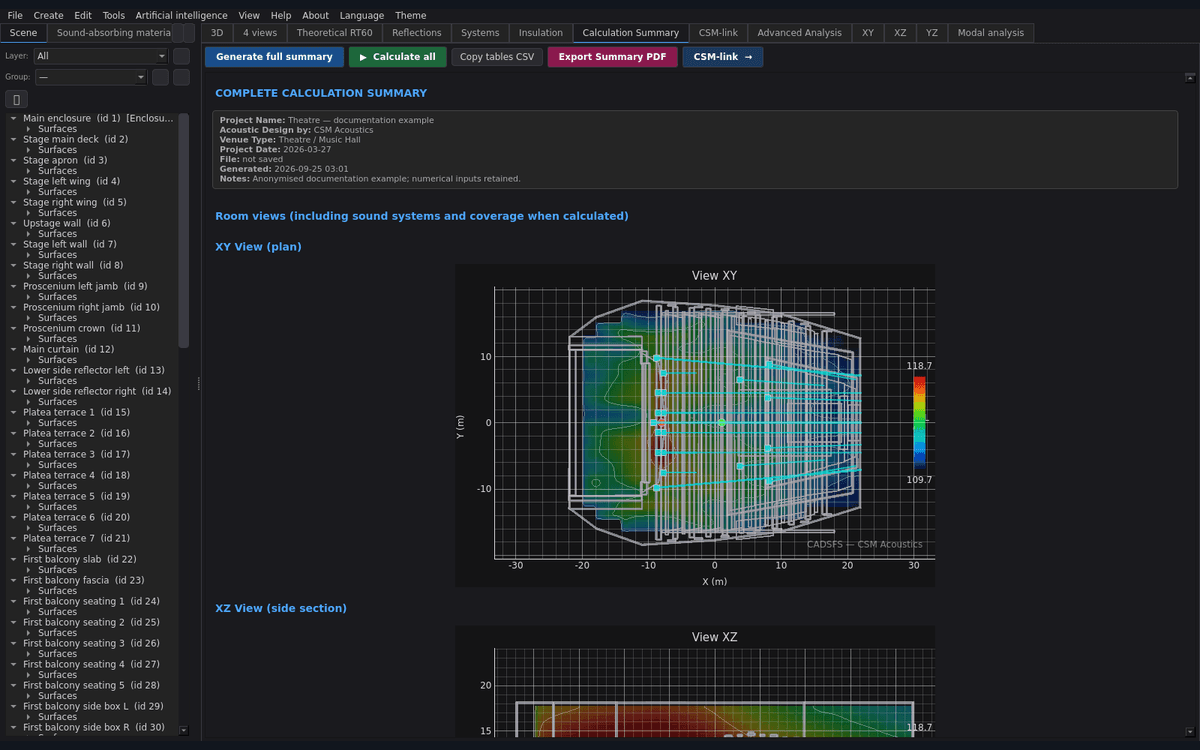
A shadowed receiver —under a balcony, behind a screen— does not get the free field. ISO 9613-2 barrier attenuation is applied per loudspeaker in the system.
Outdoors
With no walls to help, energy leaves and does not come back. Open-air mode computes propagation per ISO 9613-2 —with its real terms— and adapts coherence to the wind.
Immersive systems
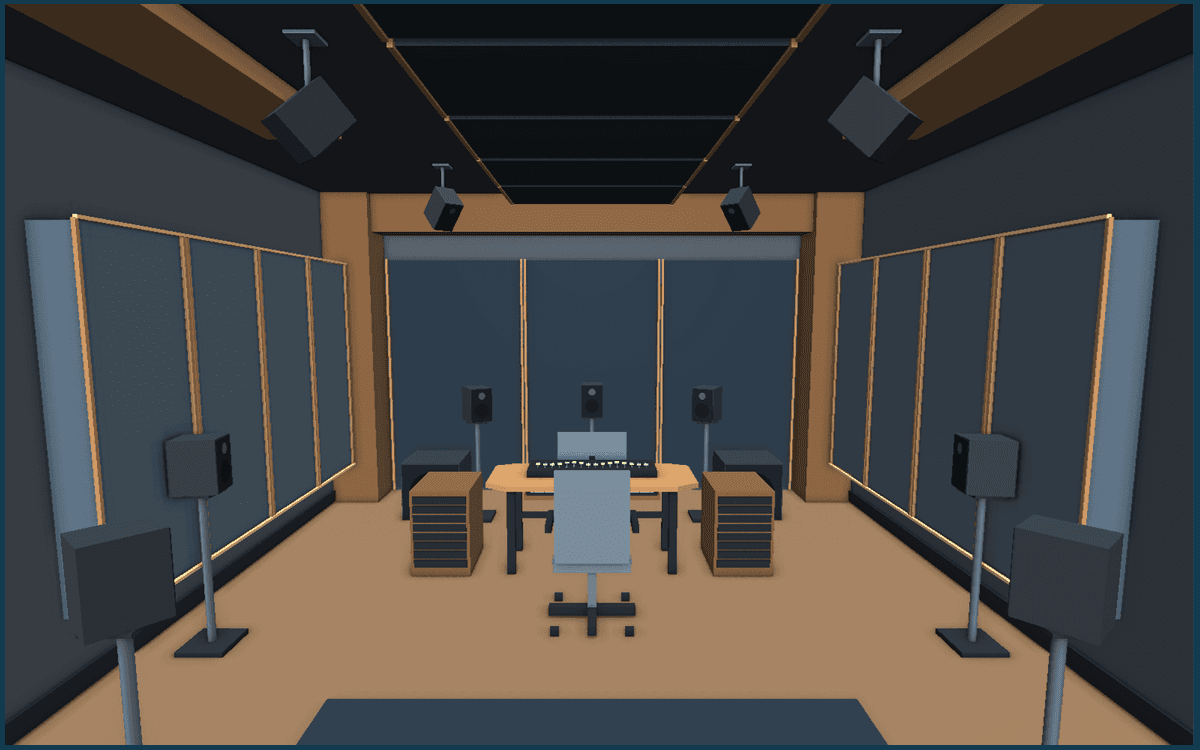
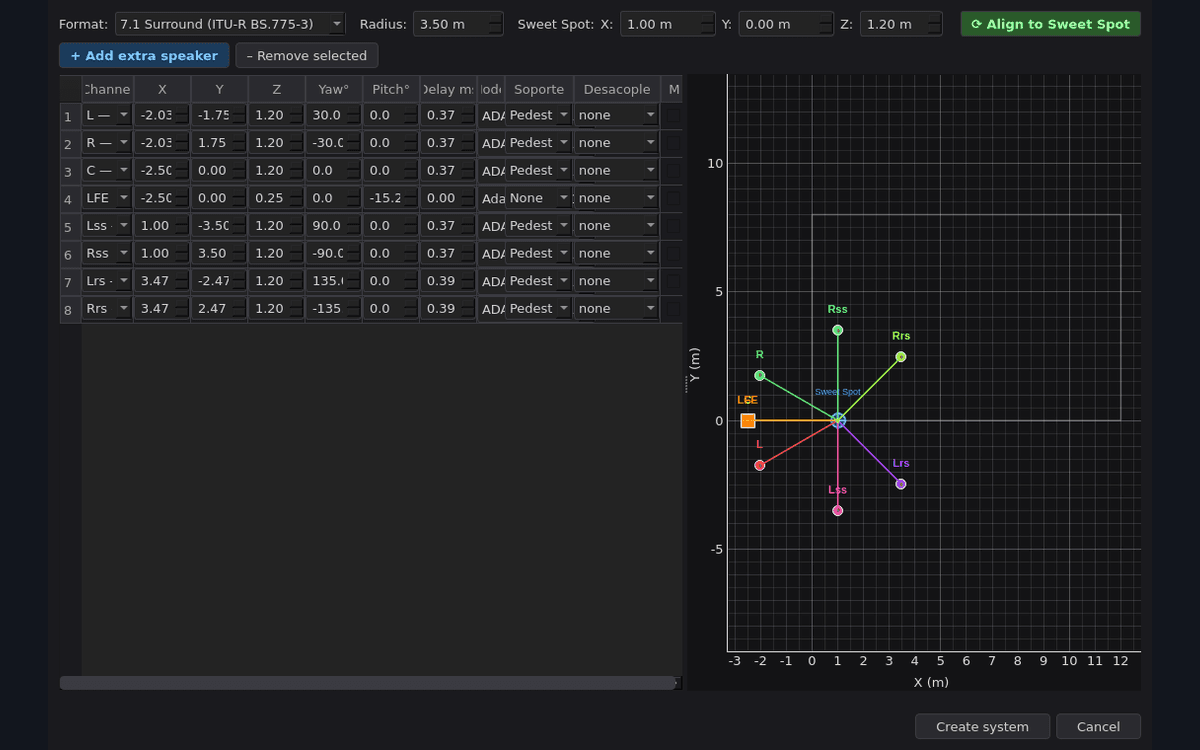
It designs channel-based and object-based systems, up to 9.1.6, and computes each channel's coverage across the whole audience, not only at the ideal point.
Arrays that steer without moving
In impossible rooms —reverberant halls, glass atriums, churches— the beam is shaped electronically. CADSFS designs columns and steerable arrays and predicts the beam band by band.
It states what its result is worth
The same material measured in two labs differs by 20 to 30 %. CADSFS reports the margin of each prediction (±dB) instead of a falsely exact figure. No compared tool does this.
What you can do with CADSFS
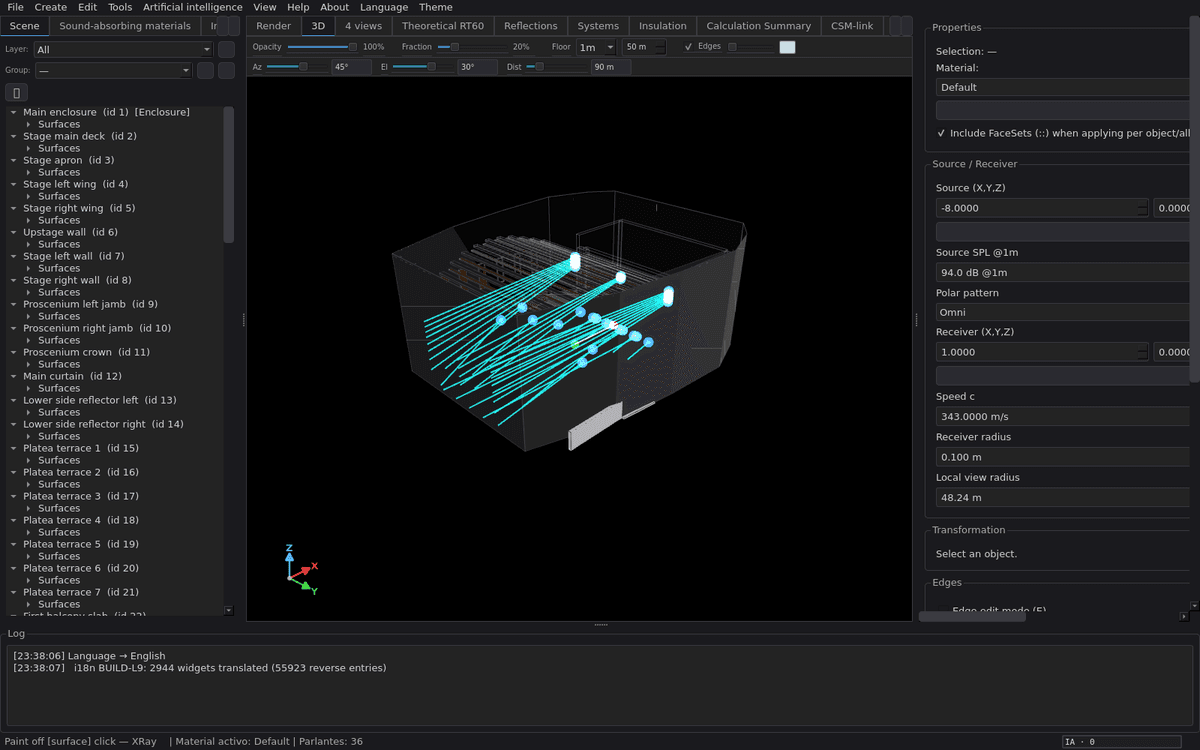
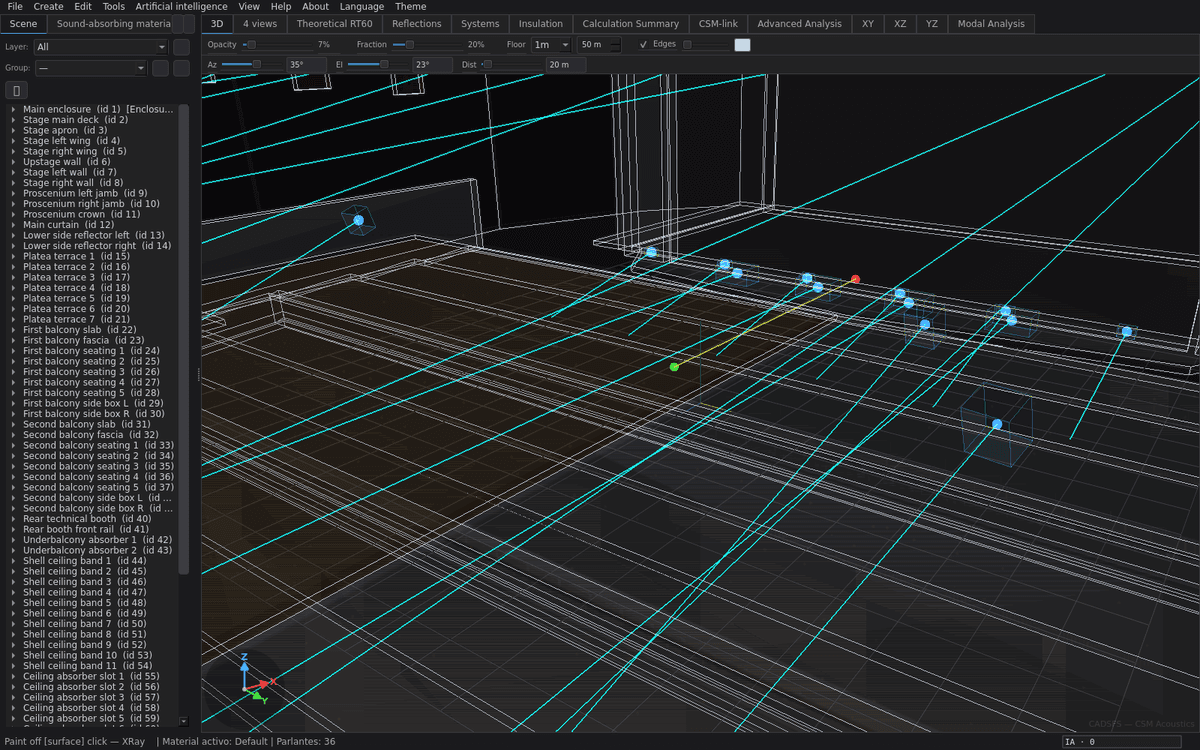
Design a room
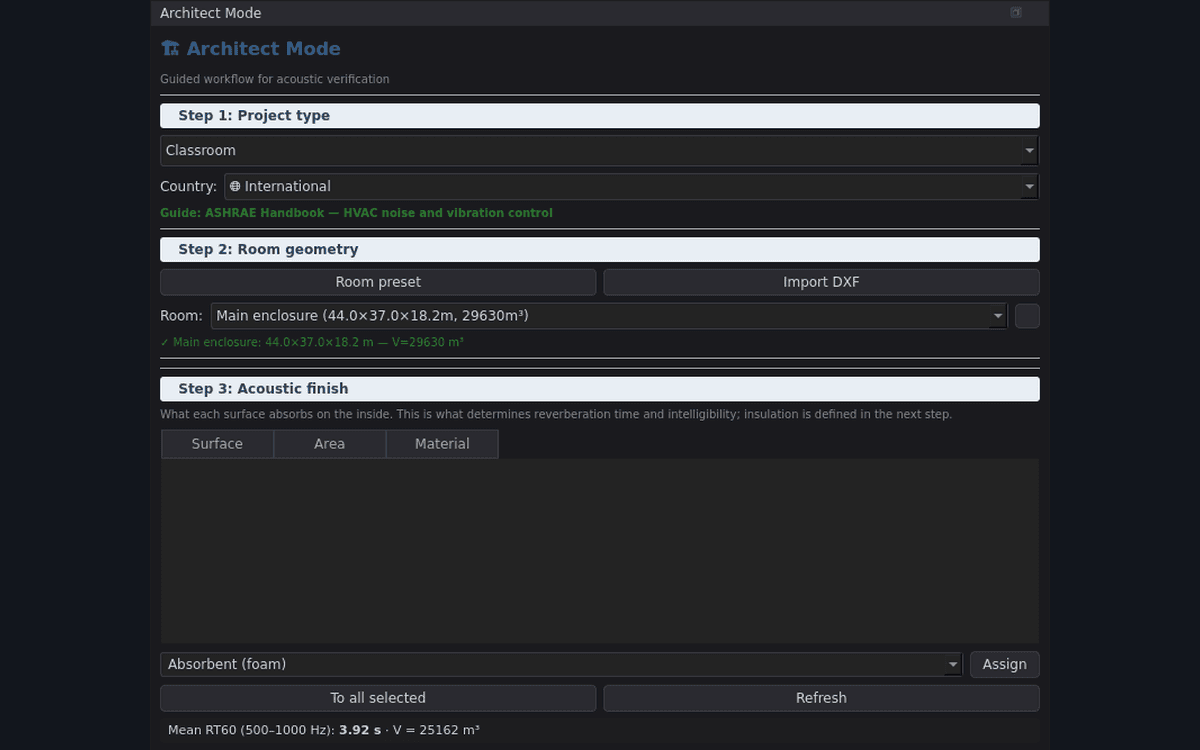
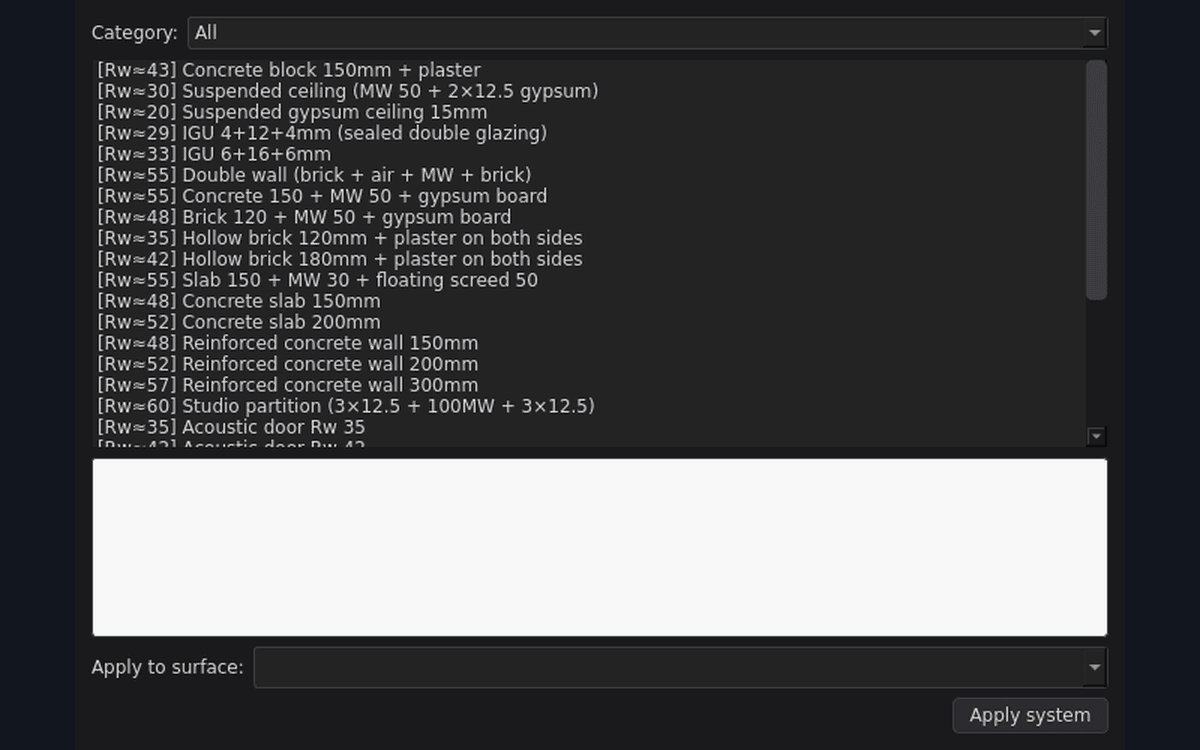
Native or imported geometry (DXF, SketchUp, Rhino), materials from a library of thousands, and live modal analysis as you draw.
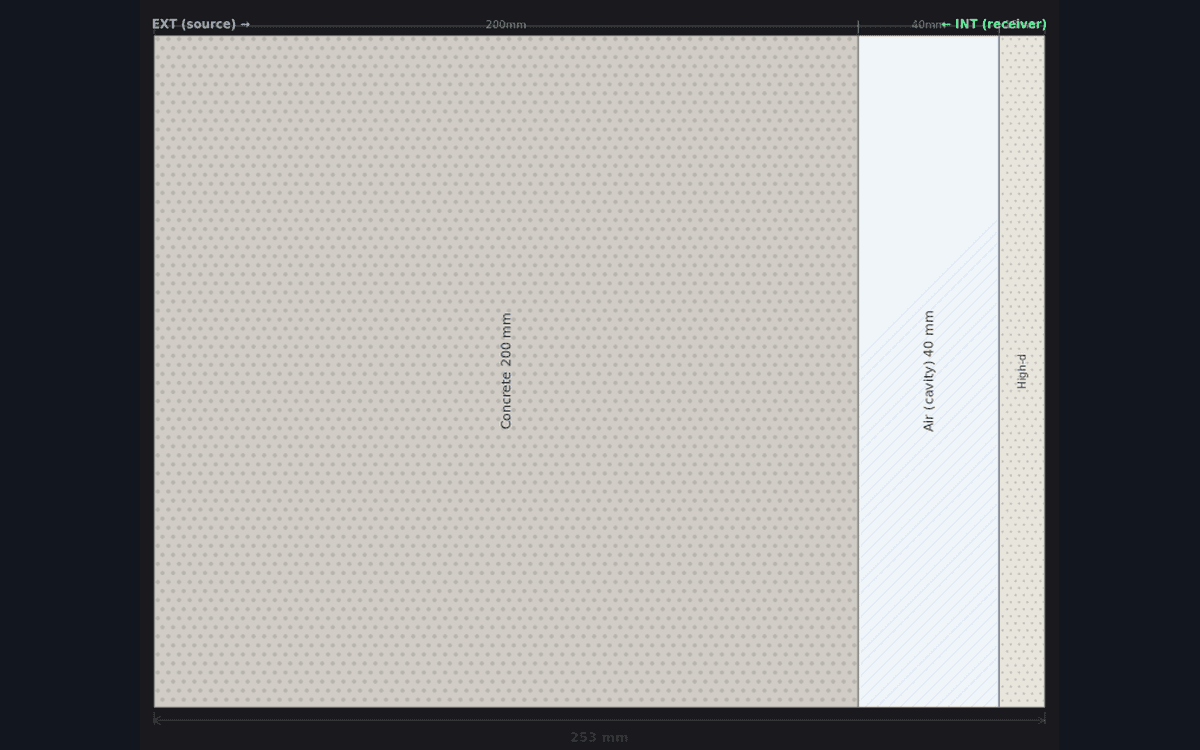
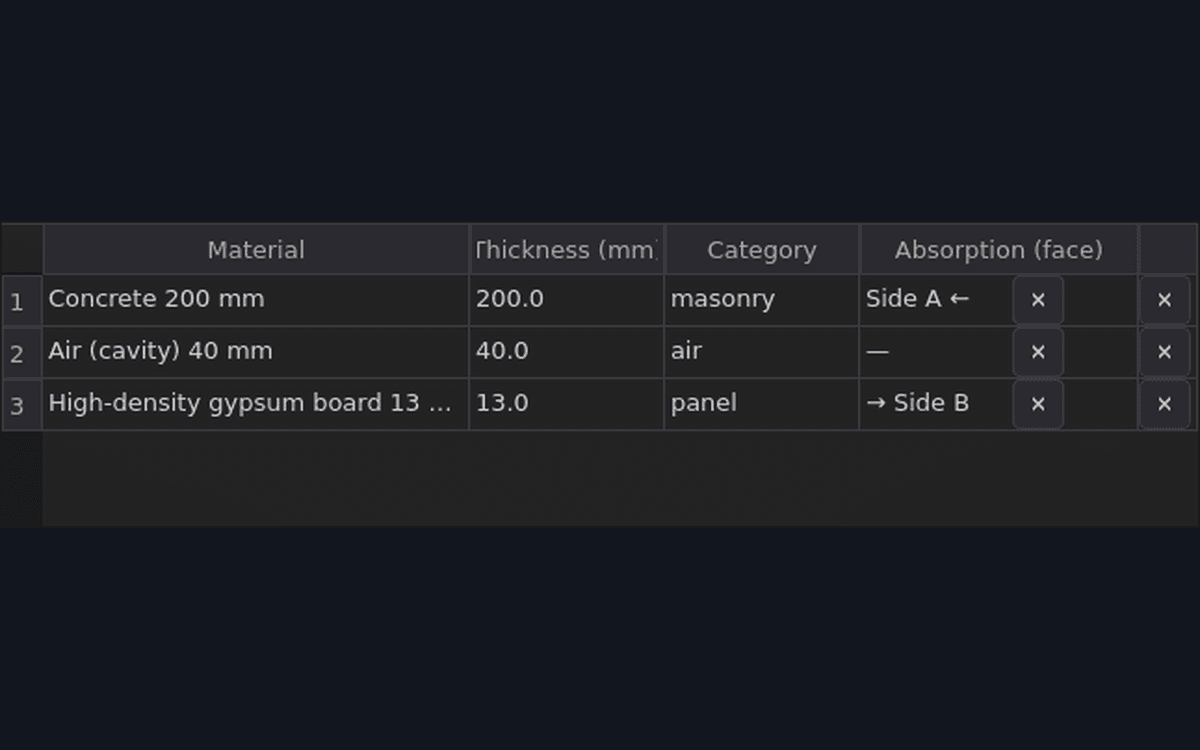
Compute insulation
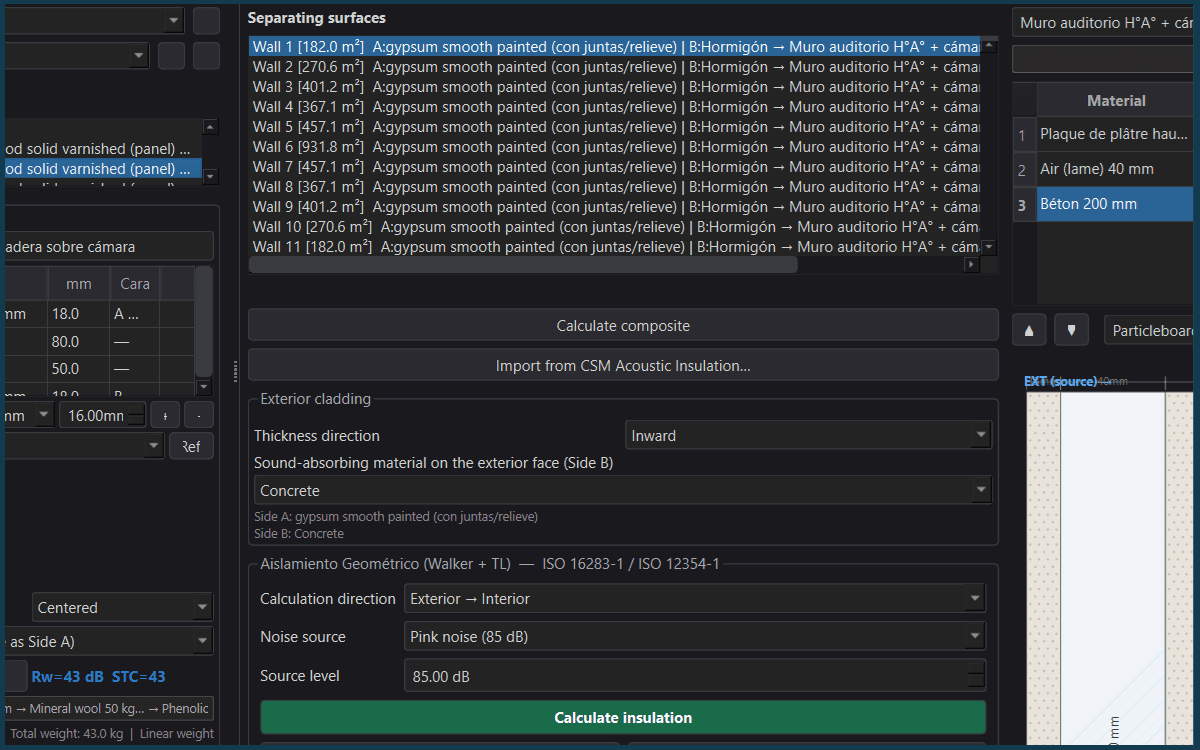
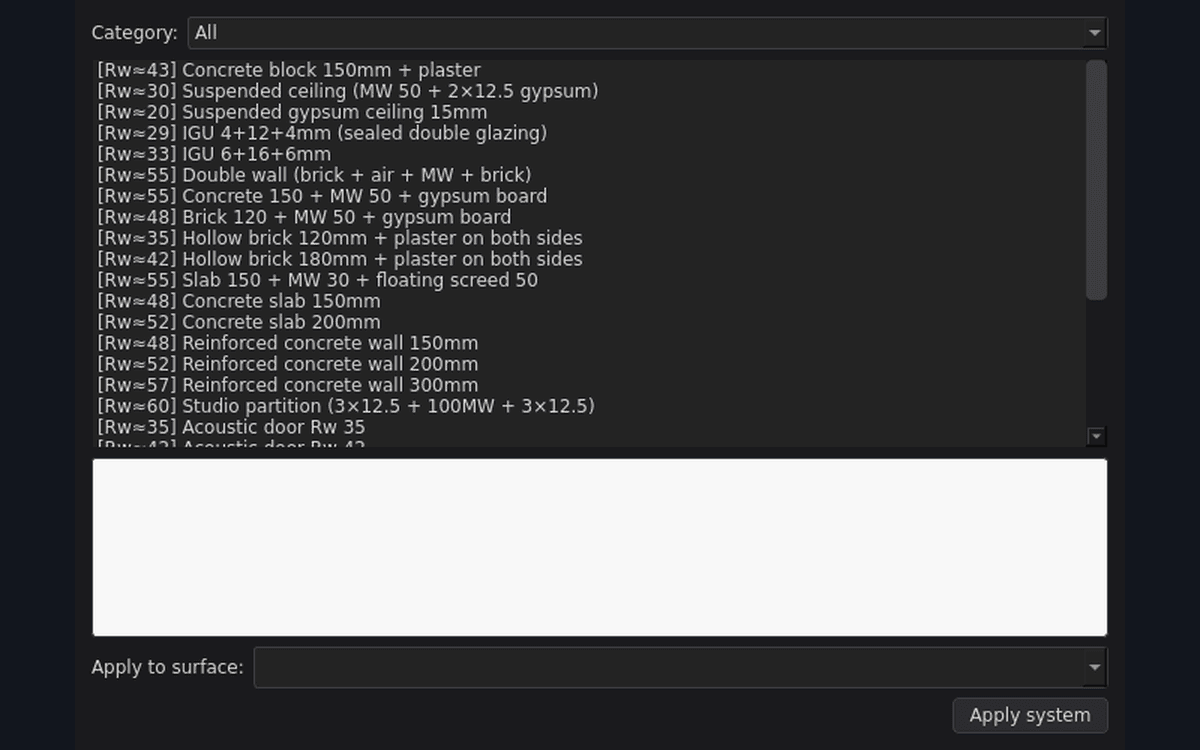
Airborne, impact and flanking (ISO 12354) on the same geometry, computed from each material's physical properties.
Design the sound system
447 loudspeakers from 26 brands, EQ with phase, delays, and assistants that build line arrays, cardioid subs and immersive rigs.
Hear the room before it is built
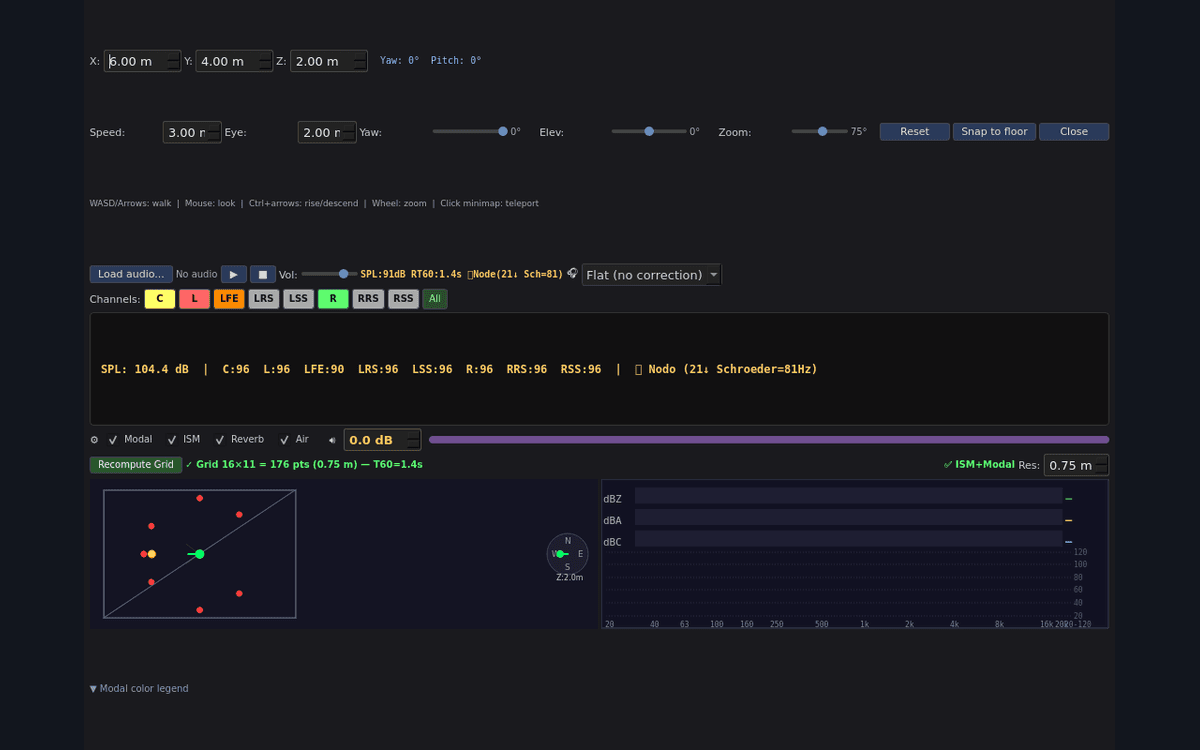
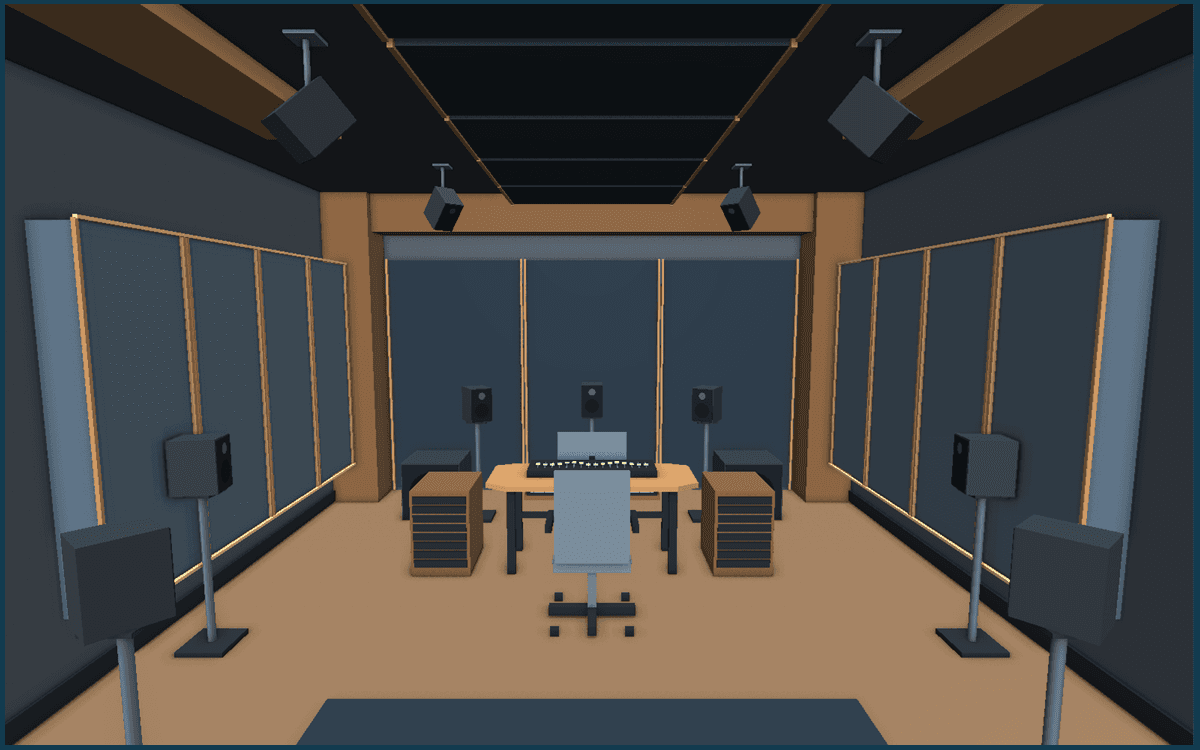
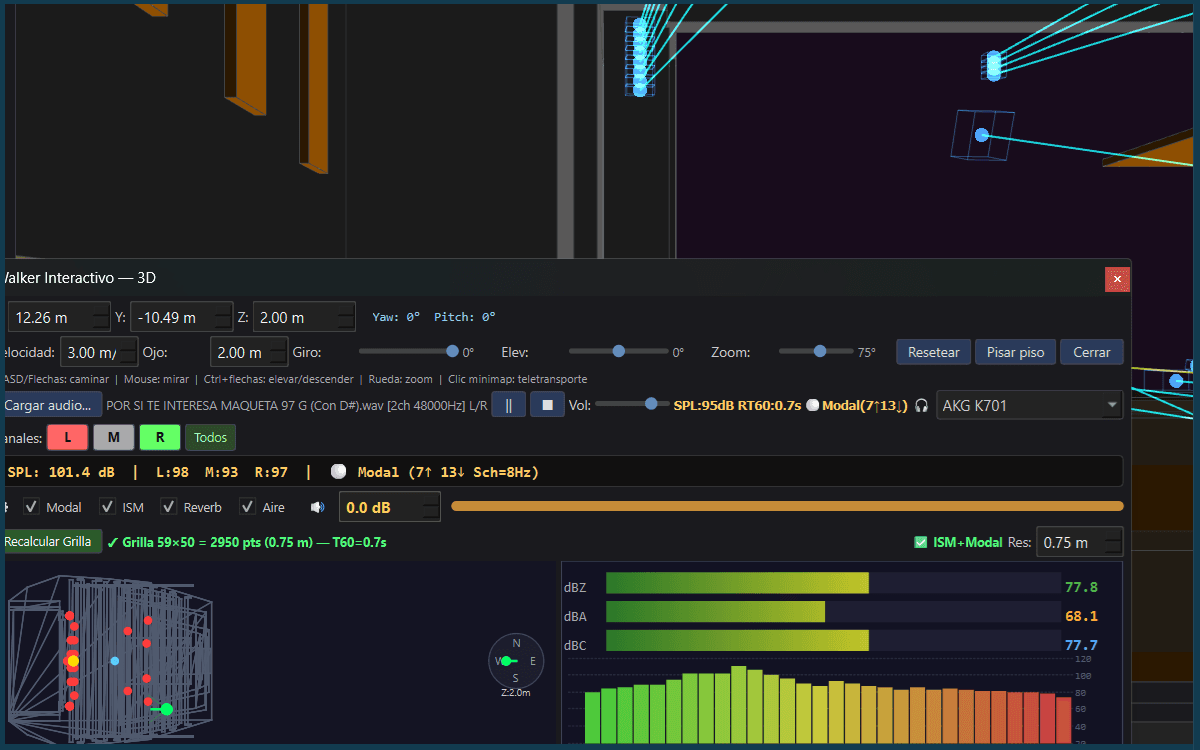
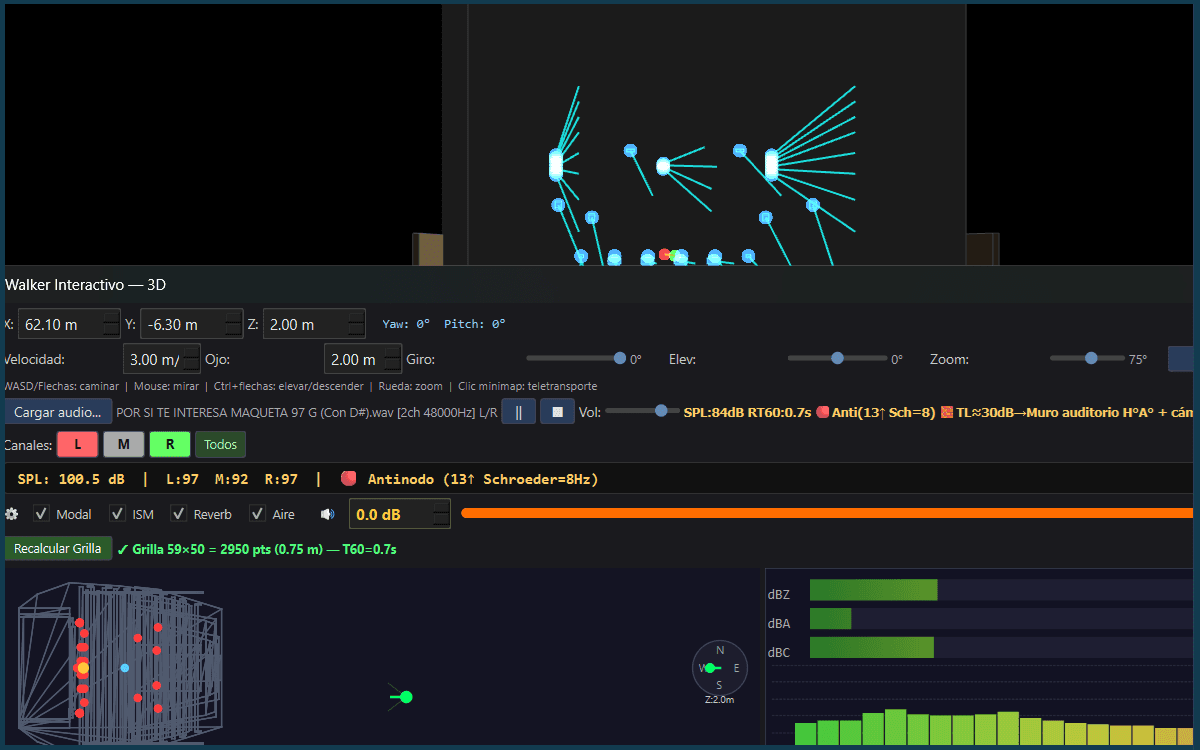
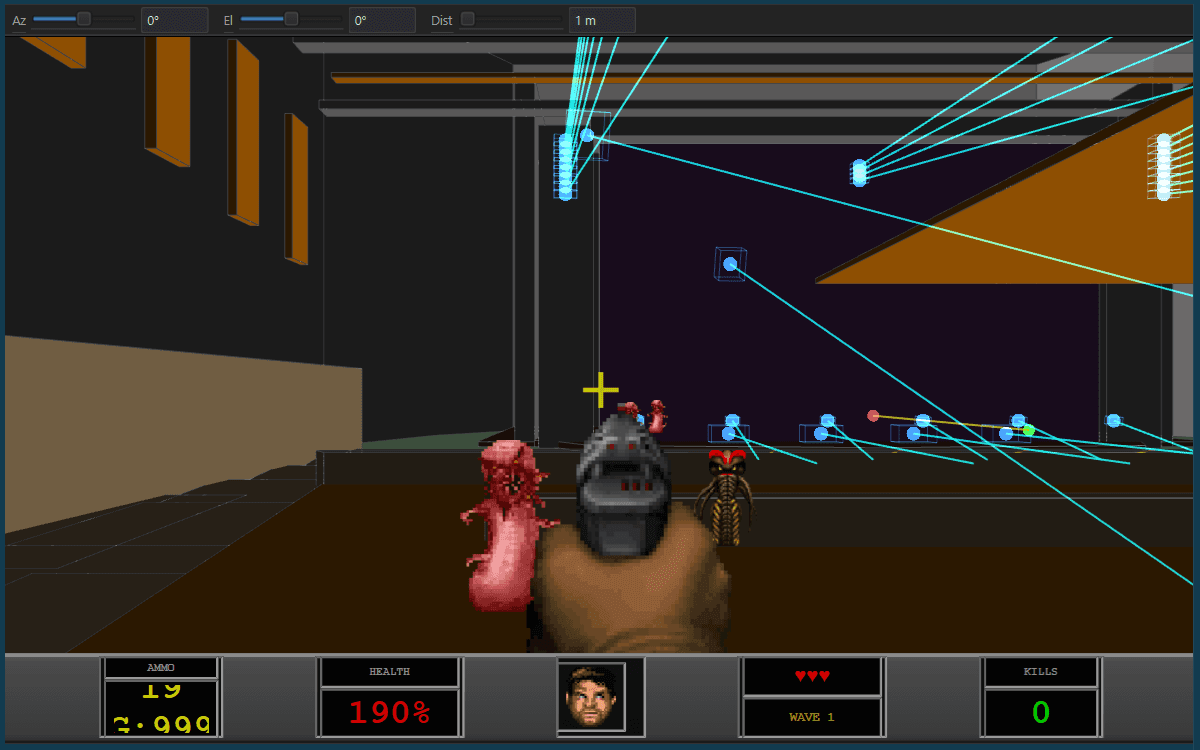
Binaural auralization with a first-person walkthrough, over any of the seven engines. Listen to the systems in the real room, with sources from mono up to 9.1.6. 60 headphone models make your perception of the sound field inside and of the isolation outside so real you will want to play Doom in there.
Check against the standard
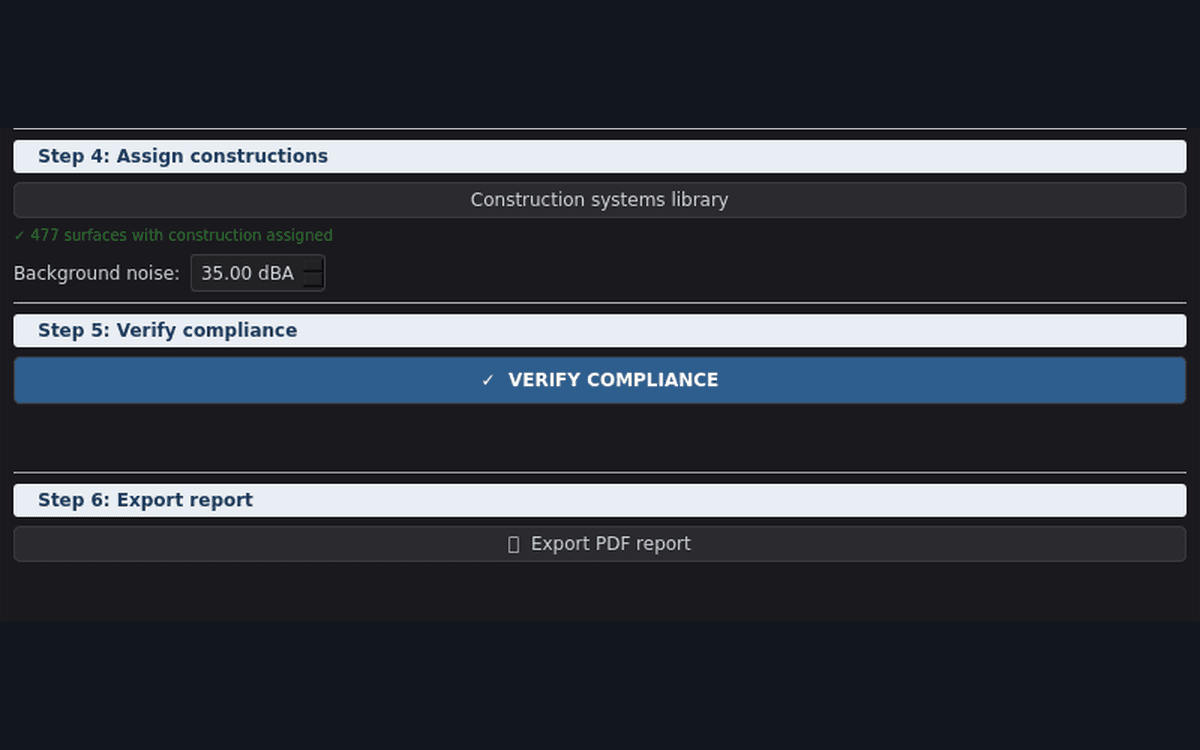
86 standards from 36 countries, with the validity status declared — including Latin American codes no commercial product carries.
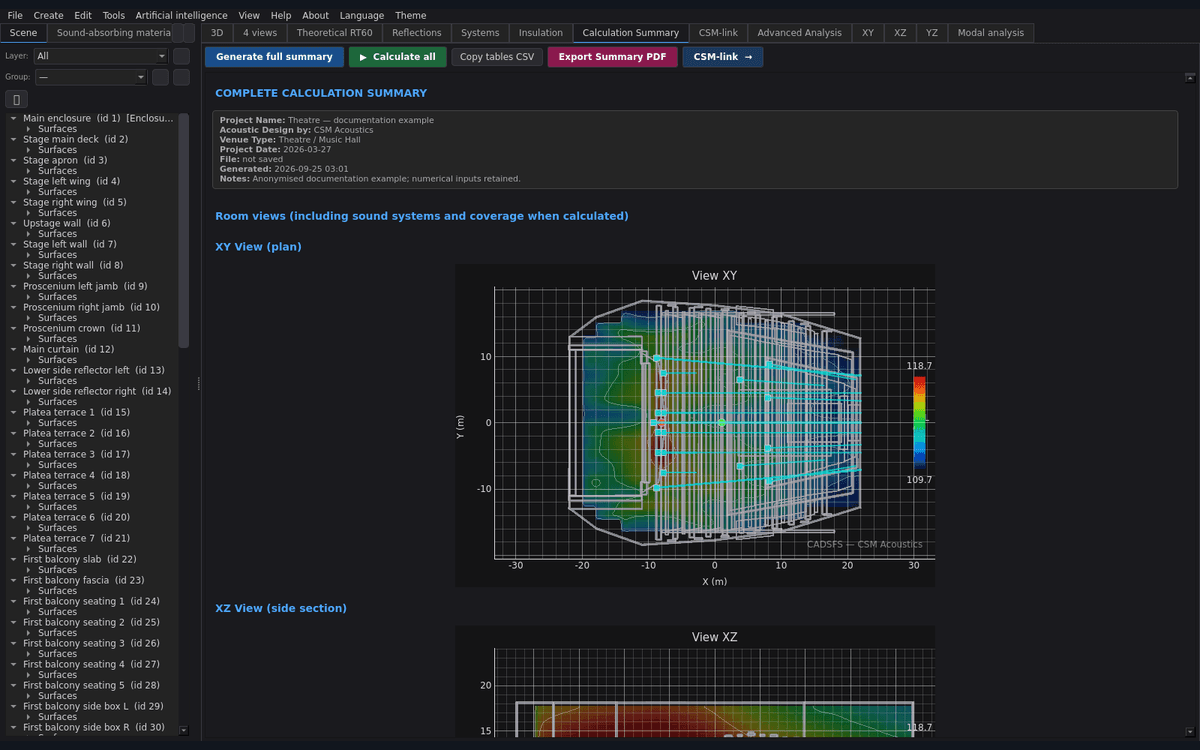
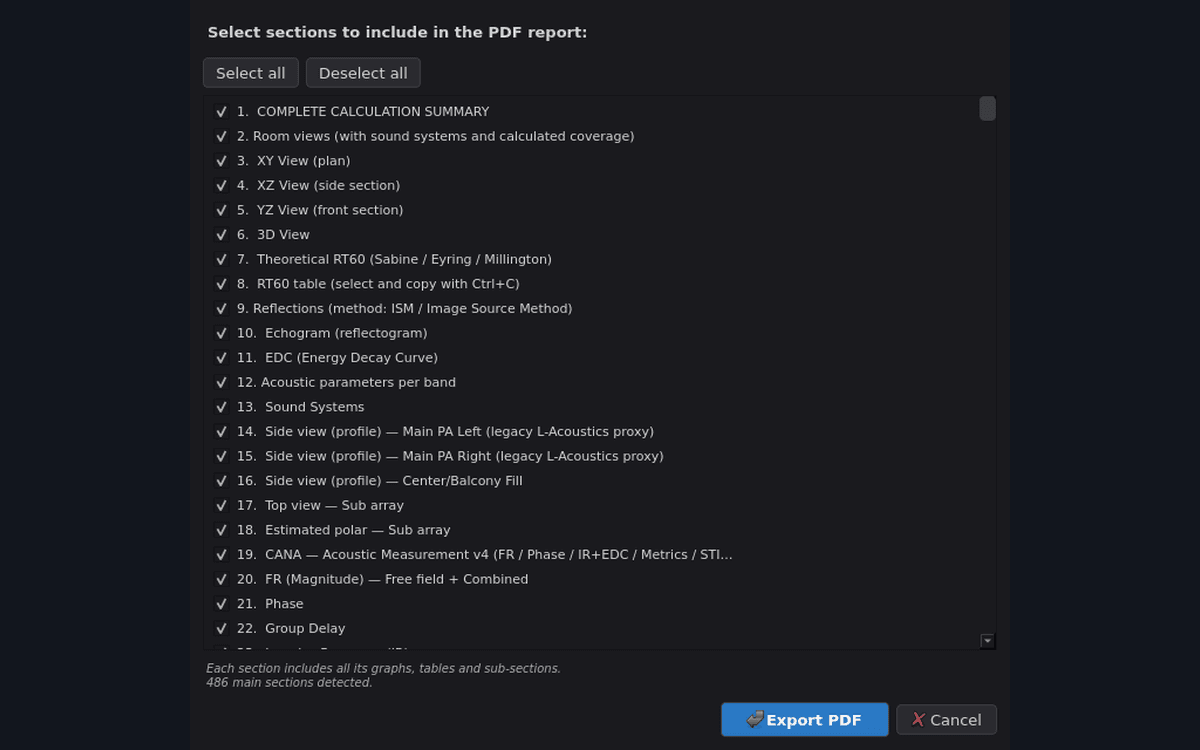
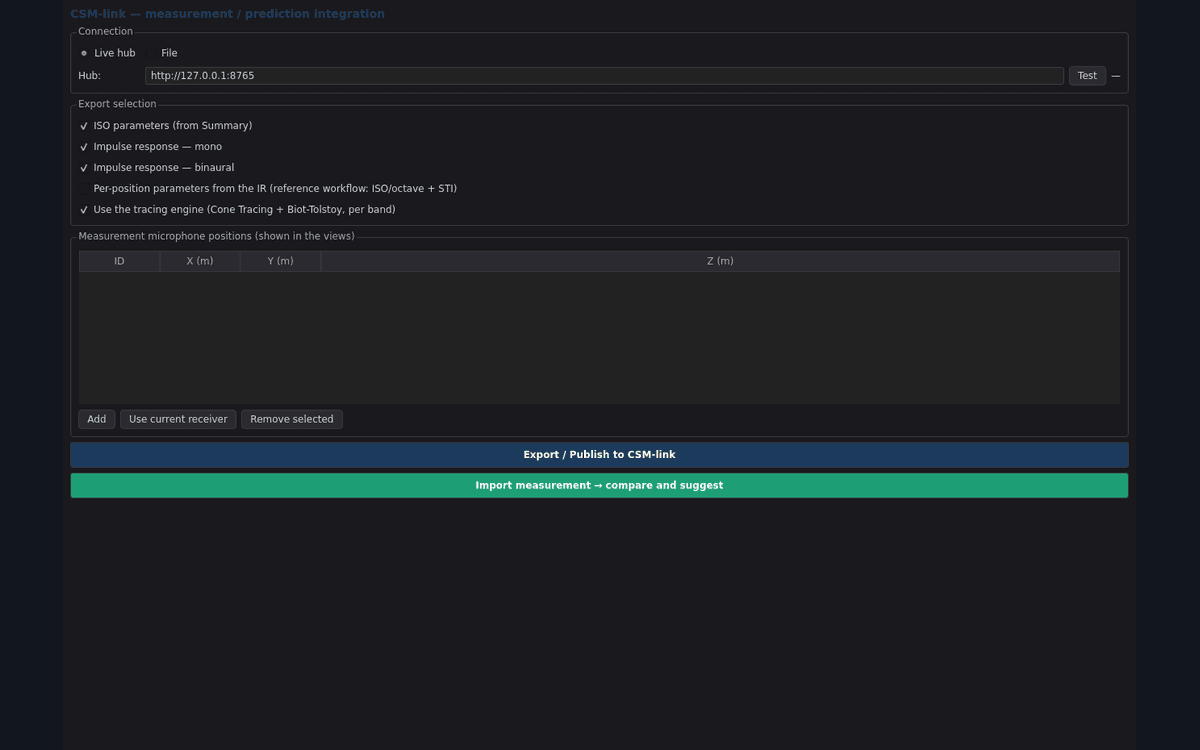
Compare against measurement
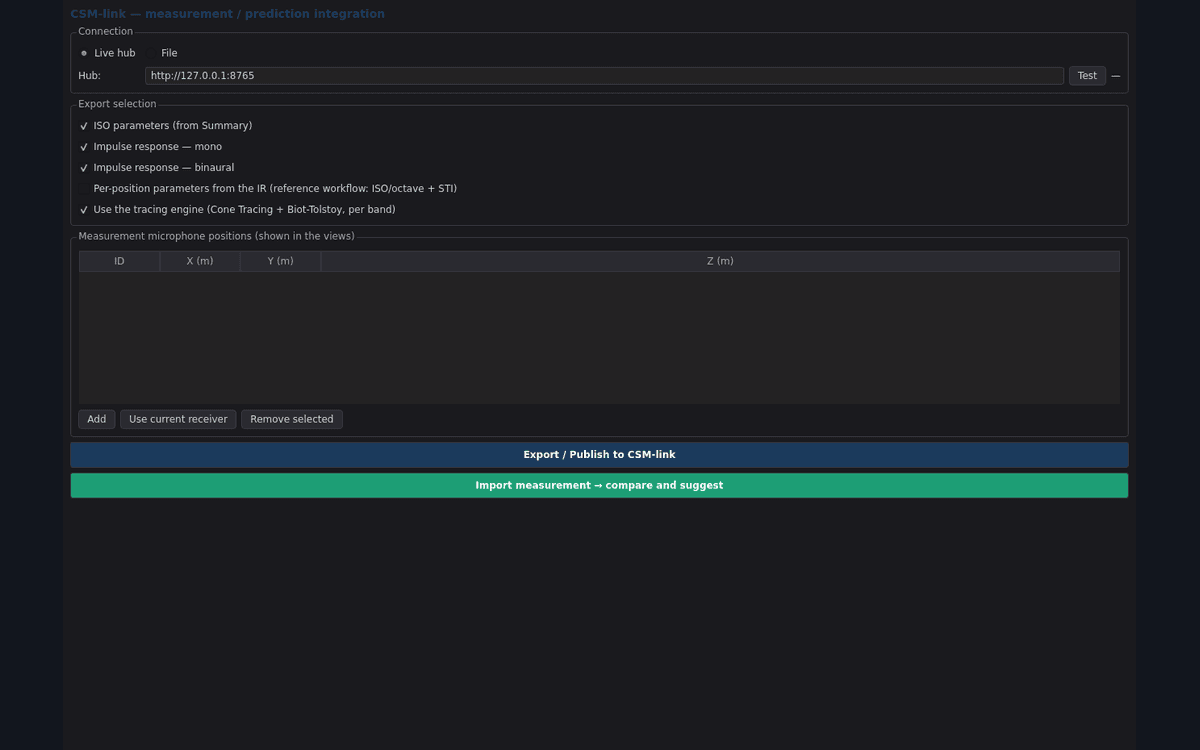
CSM-link connects with ISO 3382 measurement software in both directions, and calibrates the model against the real room.
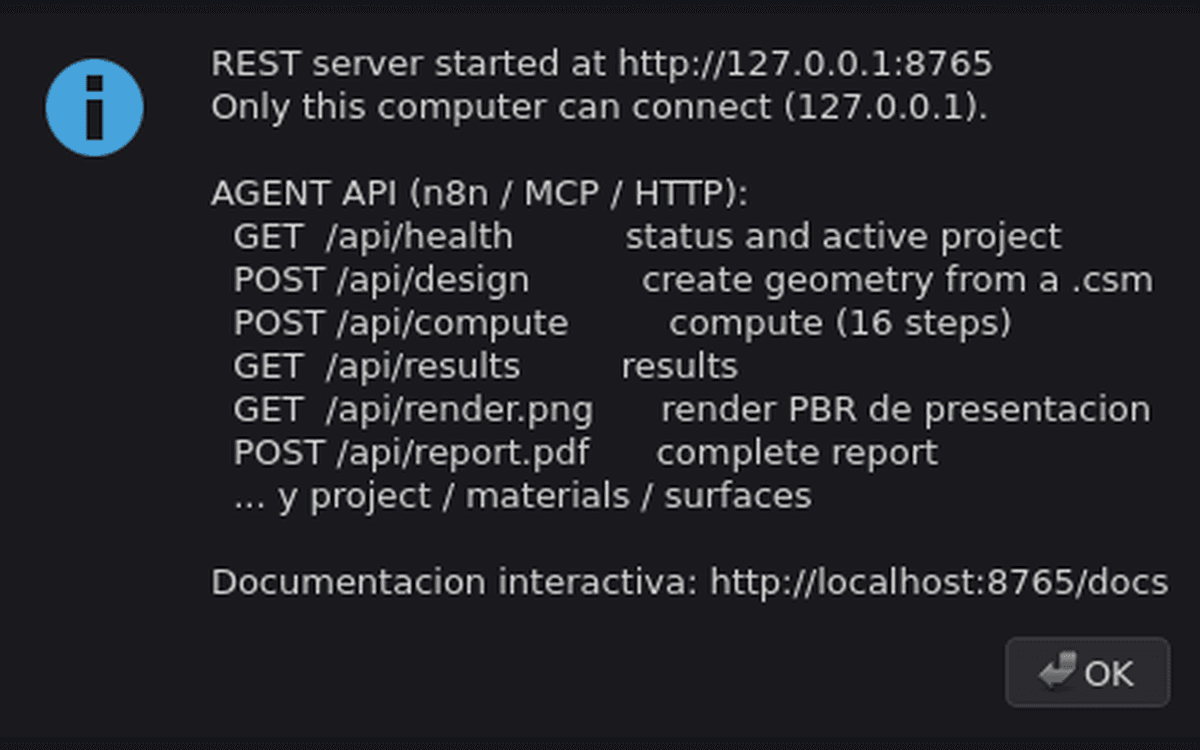
Hand repetitive work to an AI agent
52 REST endpoints and MCP configuration: an agent builds the room from a brief, computes, checks the code and issues the report.
Draw your room with AI
Describe your room in ChatGPT and Easy-Draw prepares the initial .csm file for you to open and refine in CADSFS.
Validated, not just calculated
The insulation engine is compared against measurements from independent accredited laboratories, and that verification is published in an auditable way, construction by construction.
2,6 dB
mean airborne error (Rw)
2,18 dB
mean STC error
3,9 dB
mean impact error
Against the competition
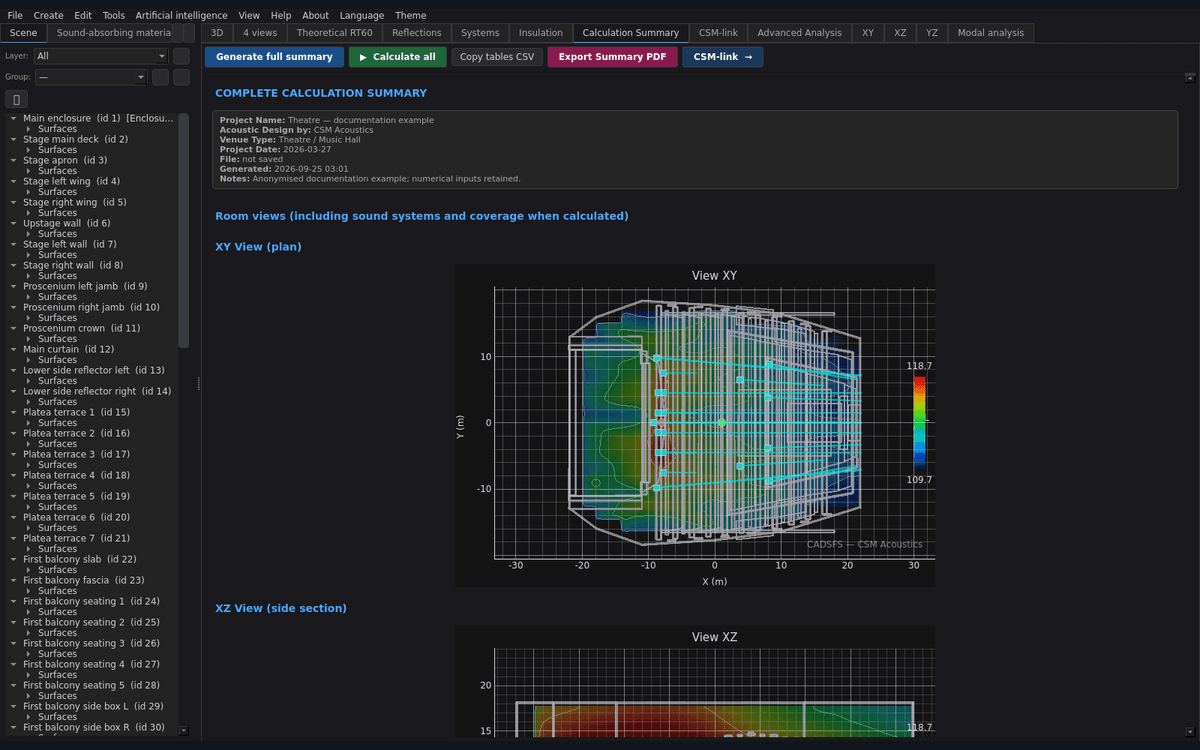
Twelve market programs were evaluated. CADSFS covers seven areas the competition splits across separate products, and in several it does things none of them do: rooms and insulation on the same model, hybrid engines with weighted crossover, exact diffraction, coupled rooms by eigenvalues, and declared uncertainty.
Versions and pricing
Estudiantil
USD 79 /yearor USD 12/mo
Students
Includes: SMartin Pro + CSM3382
Not included: Insulation module · Immersive systems and beam steering · AI assistant
Arquitecto
USD 599 /yearor USD 90/mo
Architecture / design
Includes: CSM3382
Not included: Sound System module
20% permanent discount for Latin America · Have a promo code? Apply it at checkout.
Try CADSFS for 14 days, with no feature limits.
Brochures and manuals
Brochure
Manual