Design, simulate and build acoustic absorbers.
The parametric platform that turns an acoustic goal into a buildable device: you fix what you know —material, frequency, dimensions—, the system computes the rest, simulates the full response, and outputs the 3D geometry, the cut list and the materials to fabricate.
Parametric design · complex response · 3D + fabrication · exports to CADSFS · 10 languages
Download
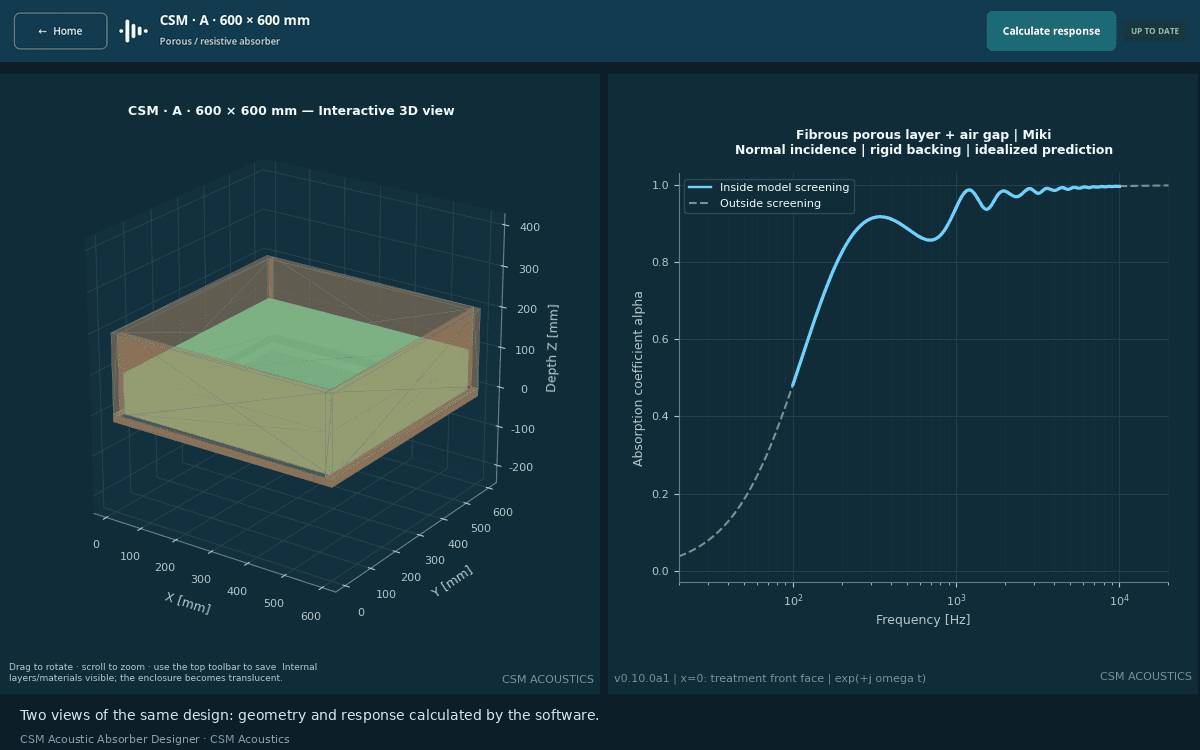
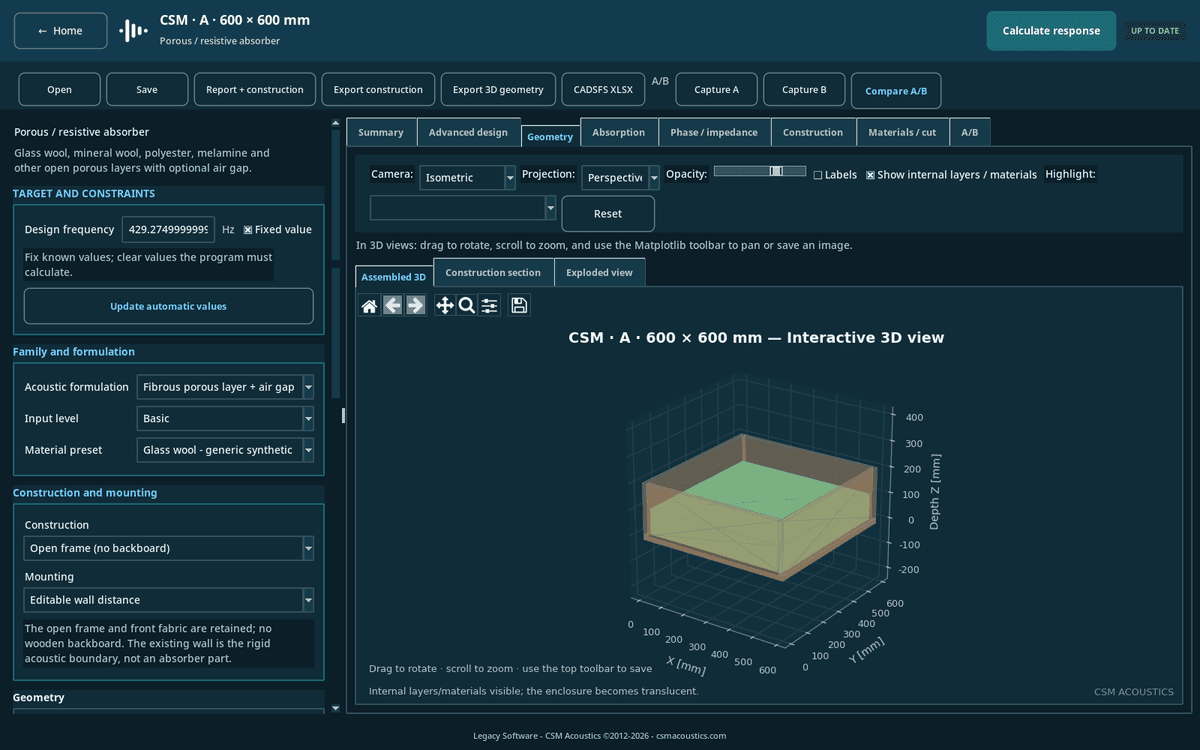
What is CSM Acoustic Absorber Designer
A parametric platform to design, simulate and fabricate acoustic absorbers. Most calculators stop at a tuning frequency; this one goes on to the complex response, the 3D geometry and fabrication. You pick a family —porous, Helmholtz, membrane, plate, tube or hybrid—, set your constraints, and the system solves the variables you leave free.
What sets it apart
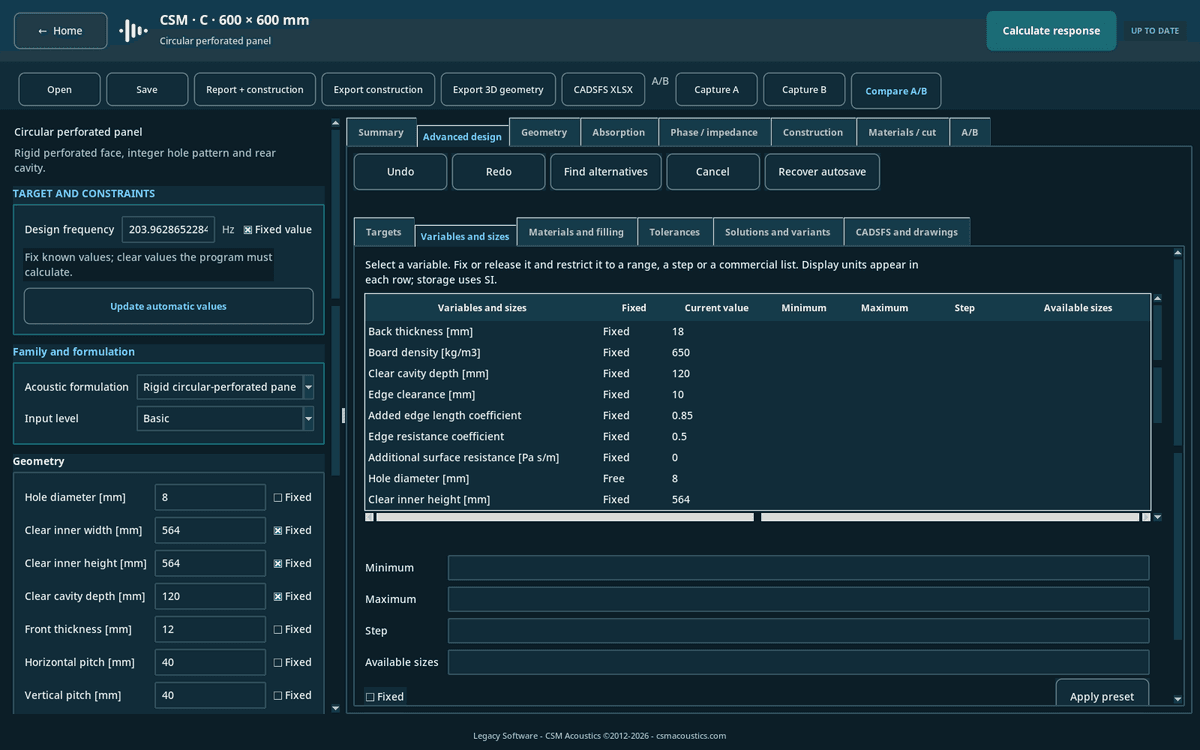
Fix what you know, compute what you don't
You know the material you sourced and the frequency you have to treat. The designer turns those constraints into buildable dimensions, through several calculation paths: fix what you know and it solves the rest.
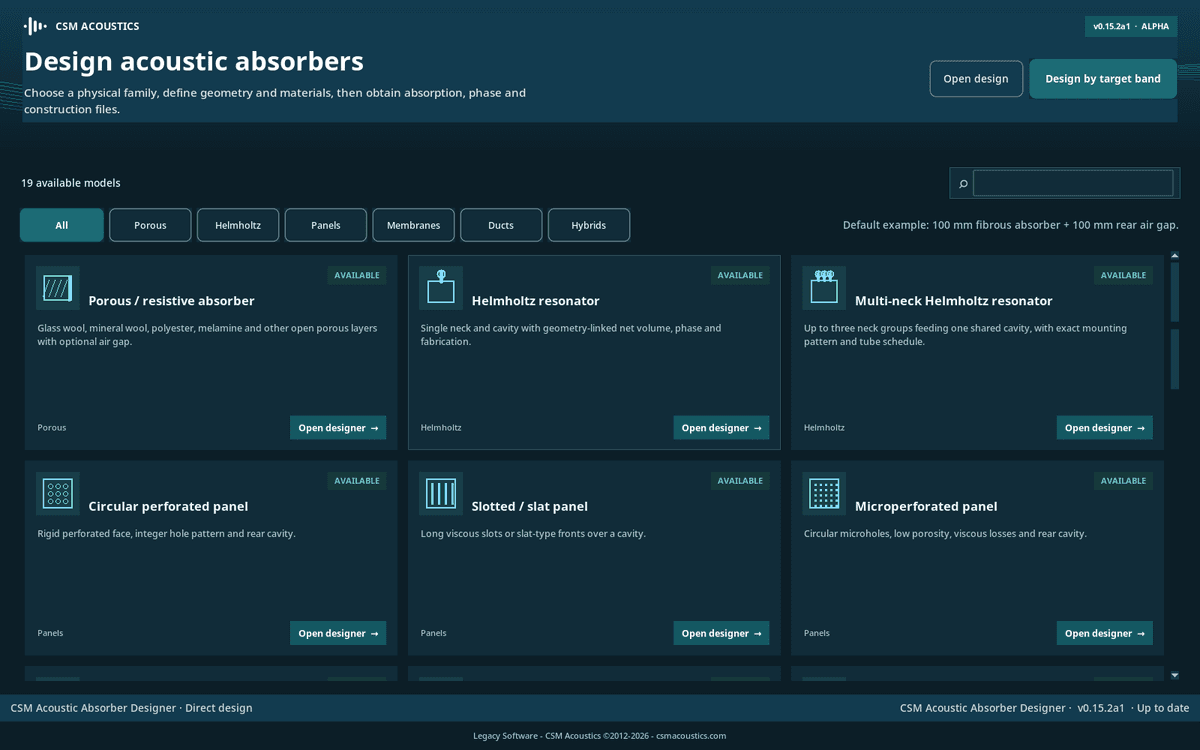
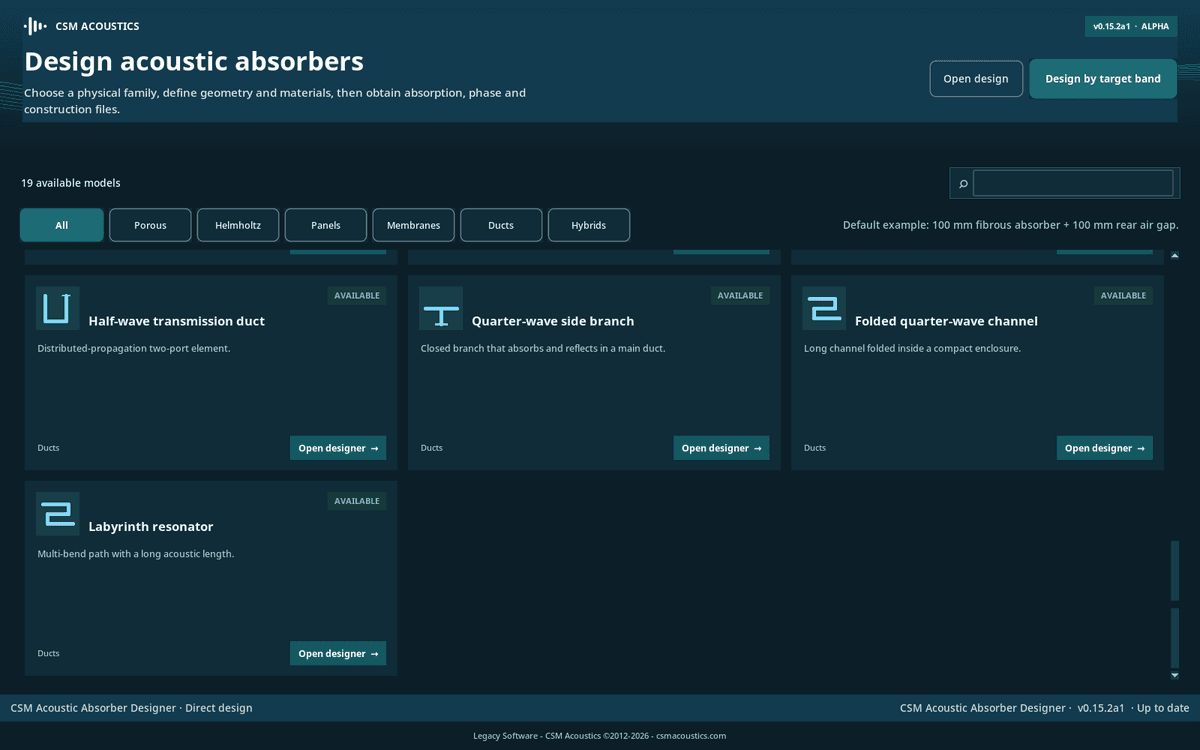
A catalogue of families, not a formula
19 families organized by physical mechanism: porous and resistive, Helmholtz resonators, perforated, slotted and micro-perforated panels, membranes, flexural plates, tubes, side branches, labyrinths and hybrids. You start from the absorber you want to build, not from an isolated equation.
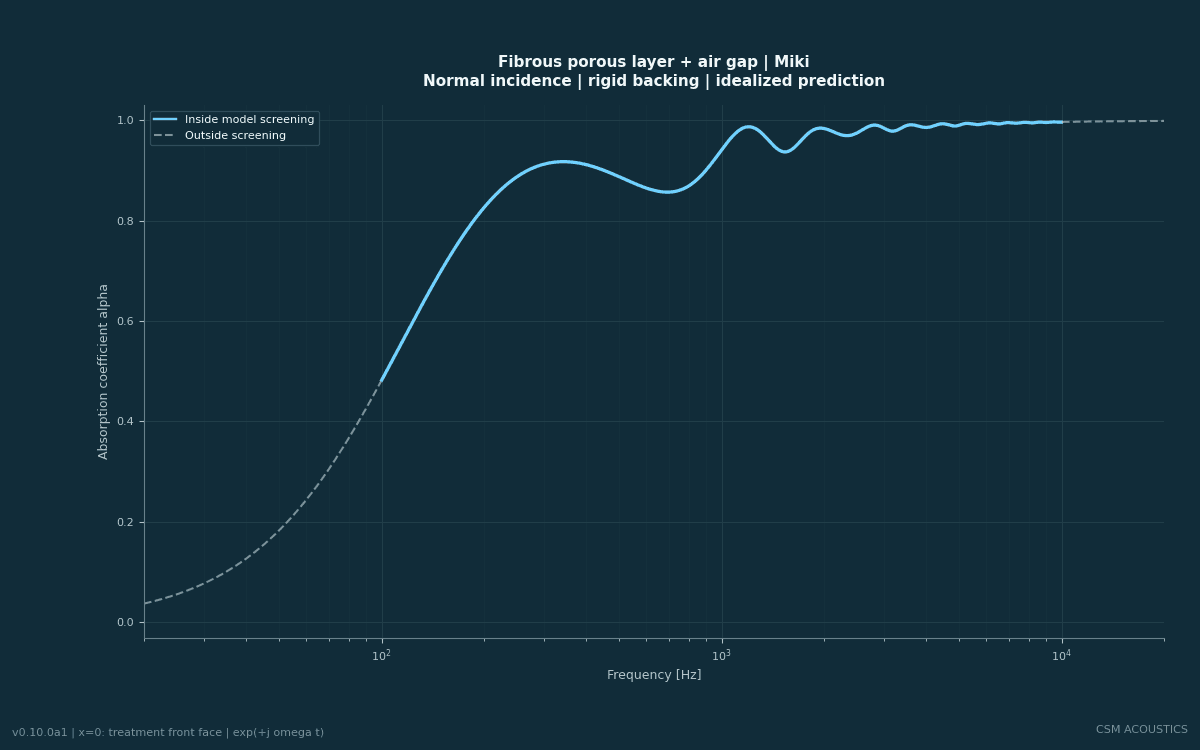
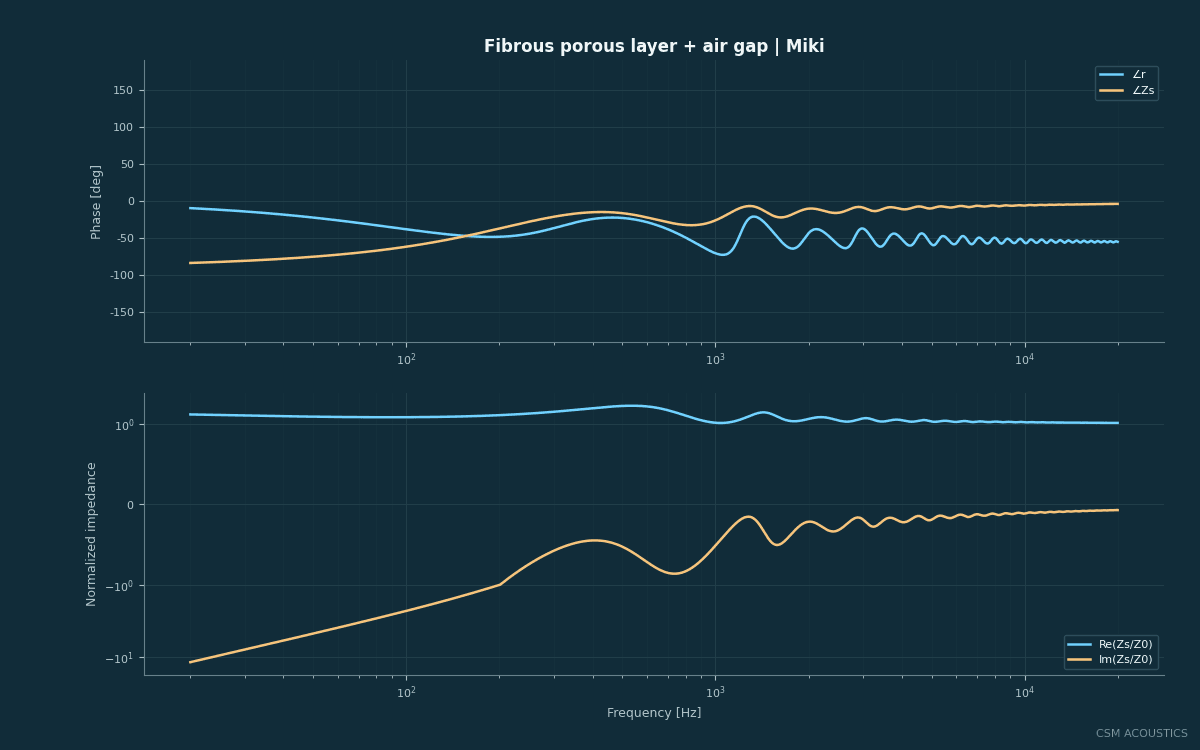
The full response, not a frequency
Absorption per band, reflection phase, impedance (resistance and reactance), reflection/transmission/absorption, Q and bandwidth, and losses per component. All derived from the same physical model.
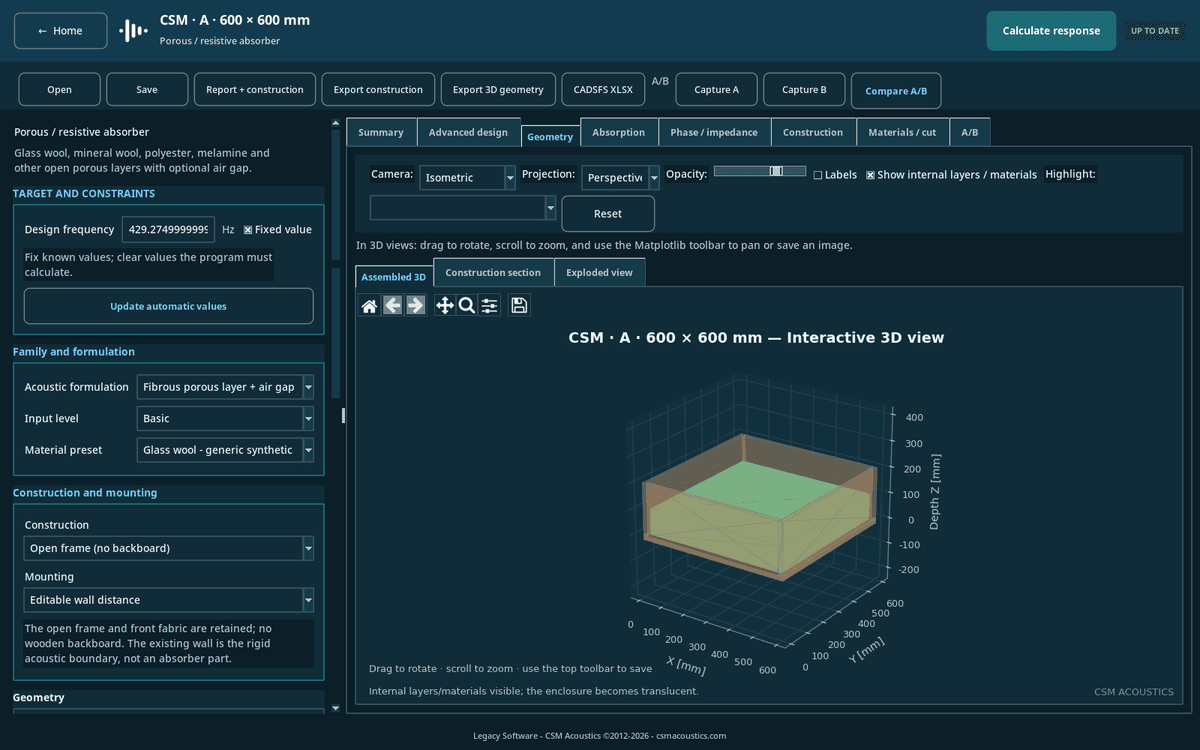
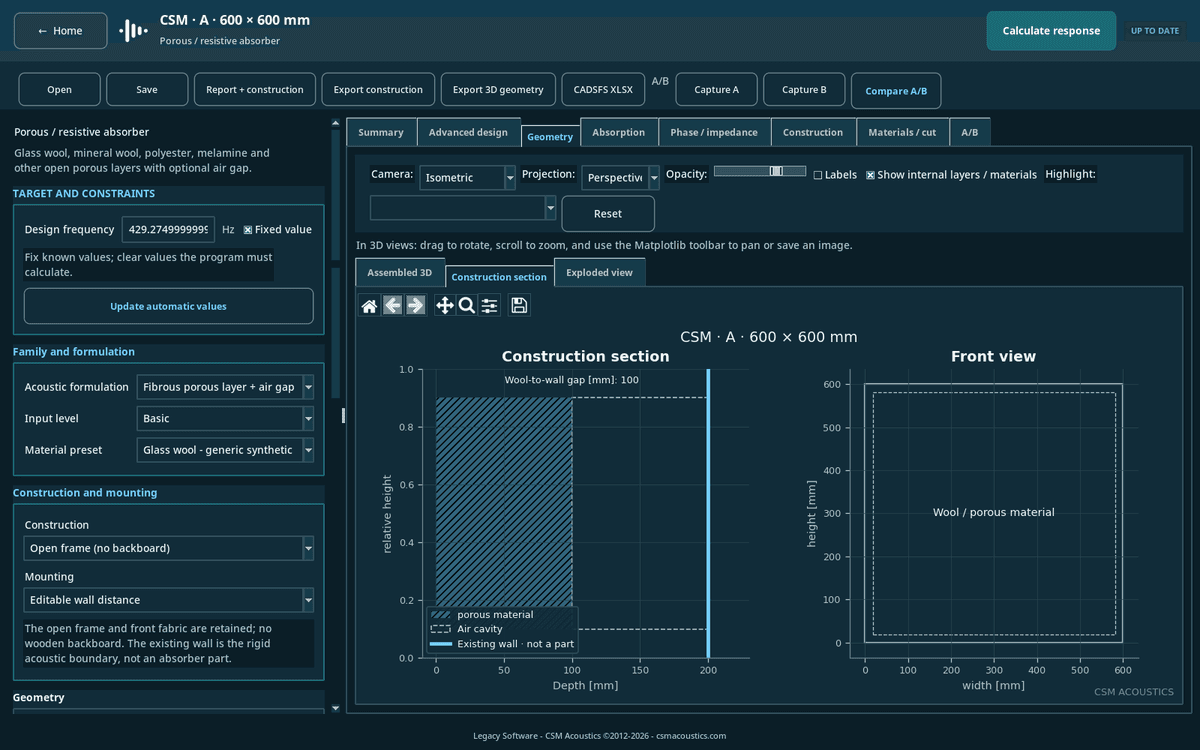
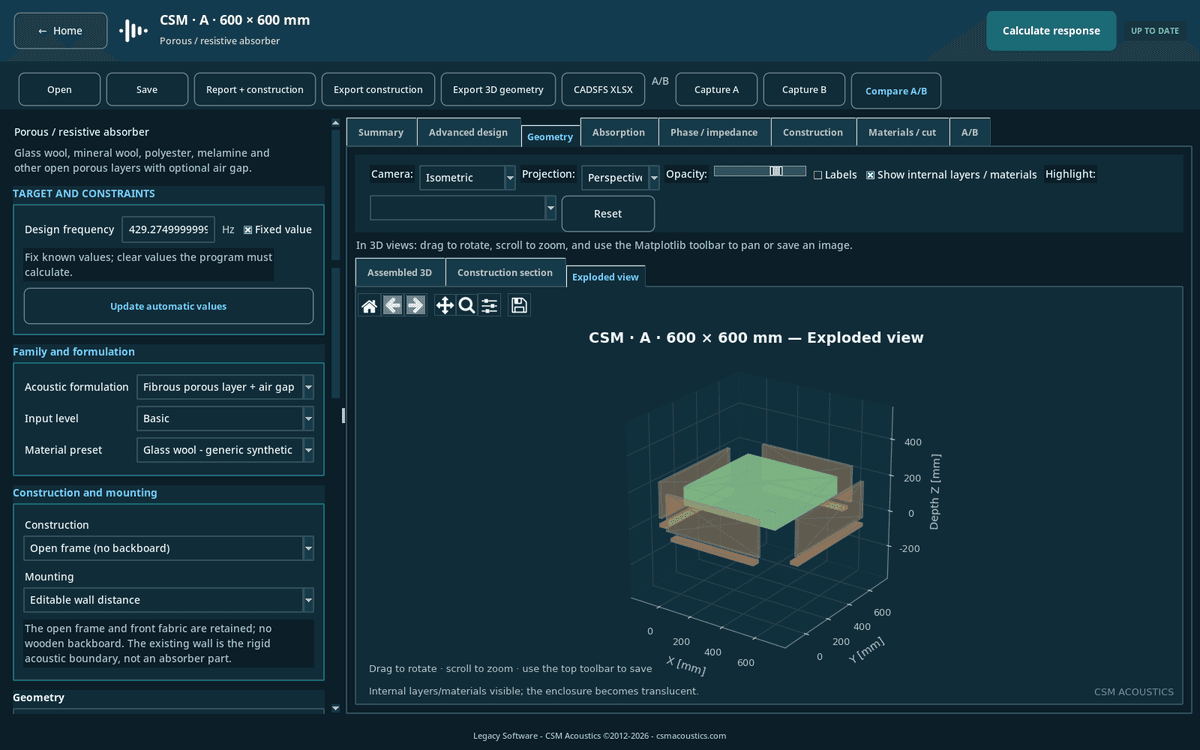
The geometry you compute is the one you build
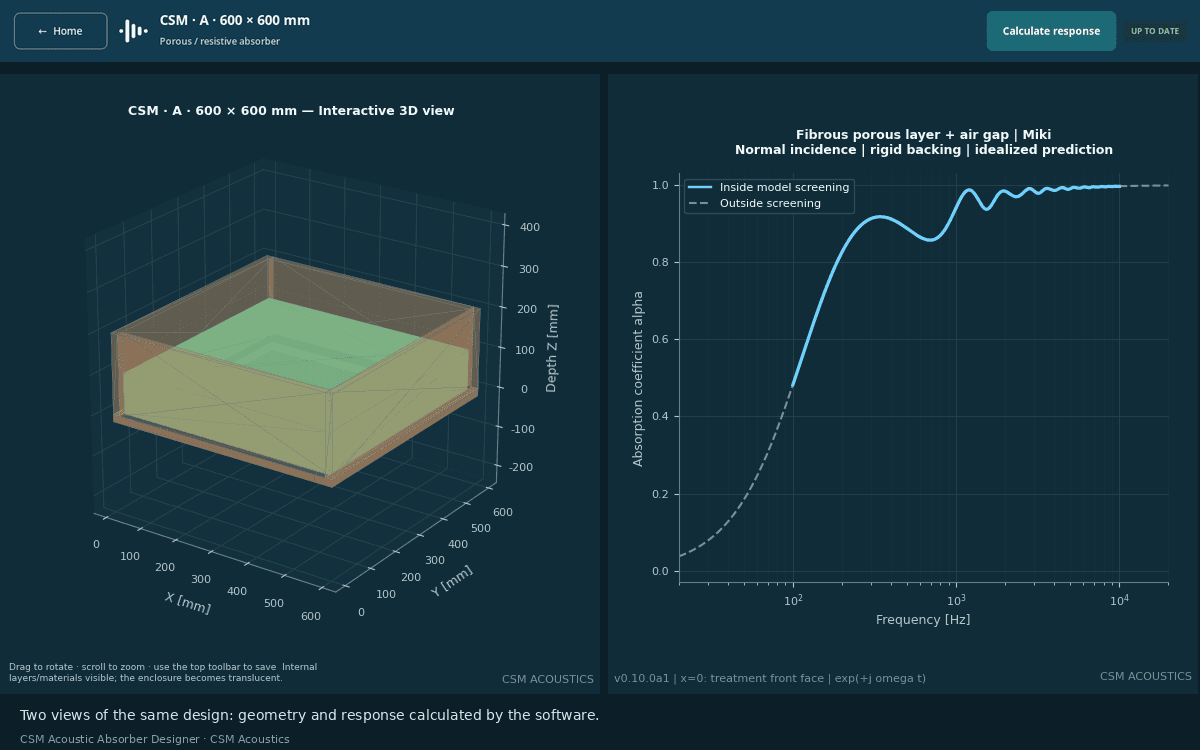
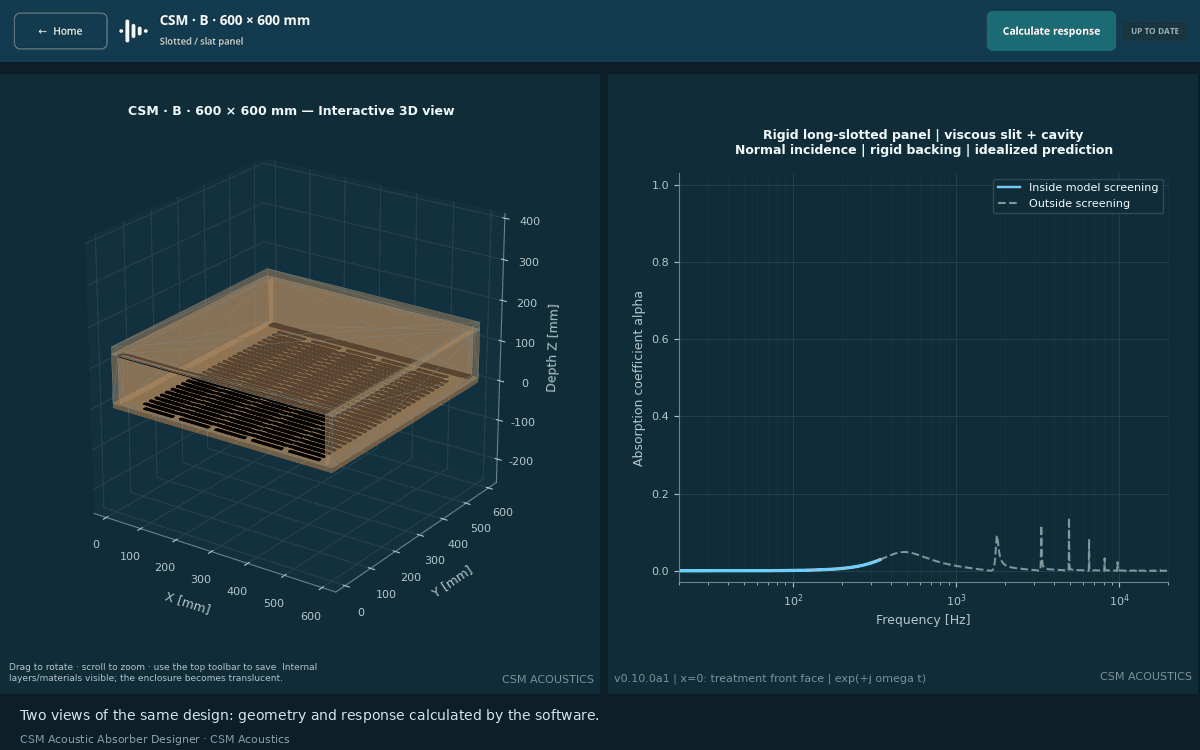
Assembled 3D view, constructive section and exploded view, with real perforations, slots and hollow necks —not solid cylinders—. Every part is linked to the cut list.
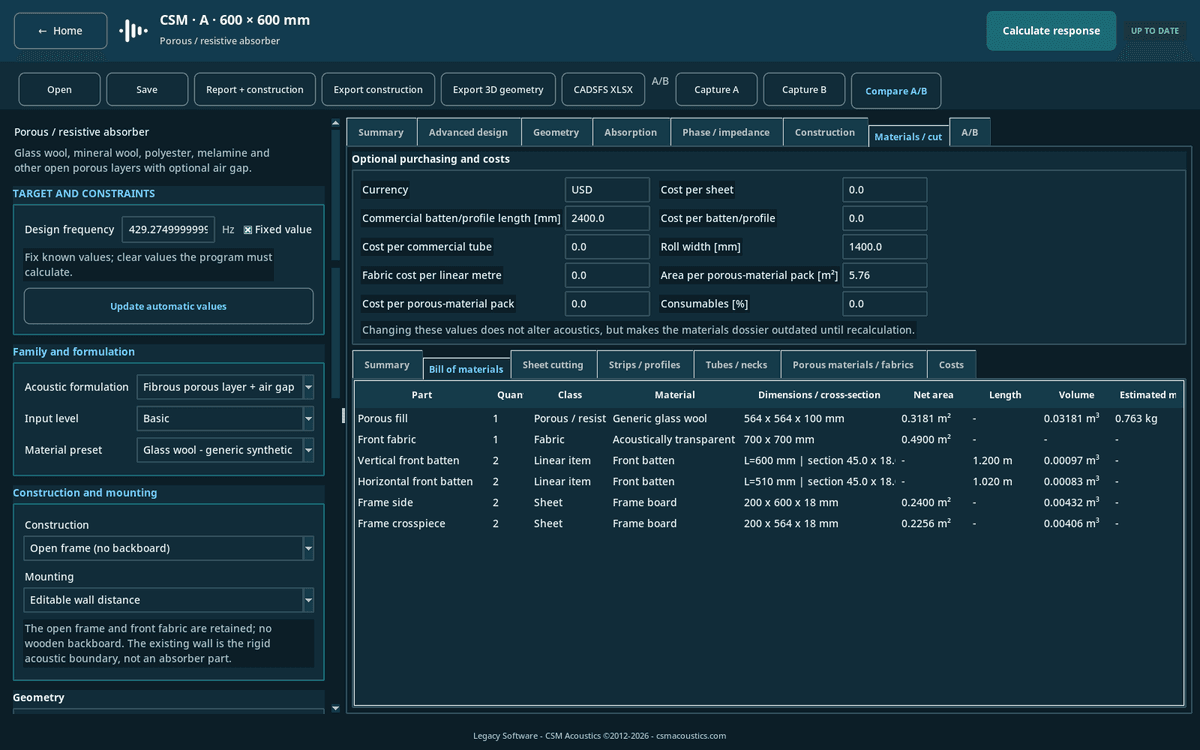
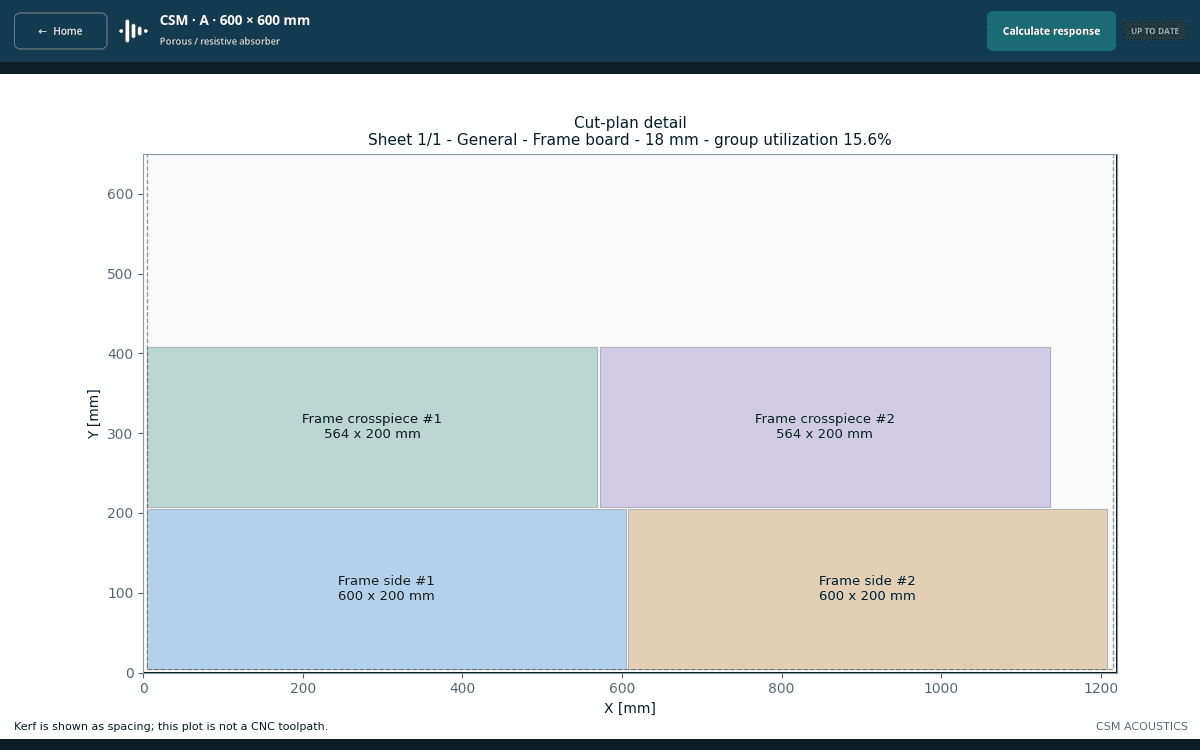
Designing is also fabricating
From the same parametric definition come the bill of materials (BOM), the cut plans with kerf loss and yield, the materials and the costs. A part that doesn't fit in stock raises an explicit rejection: it does not vanish from the plan.
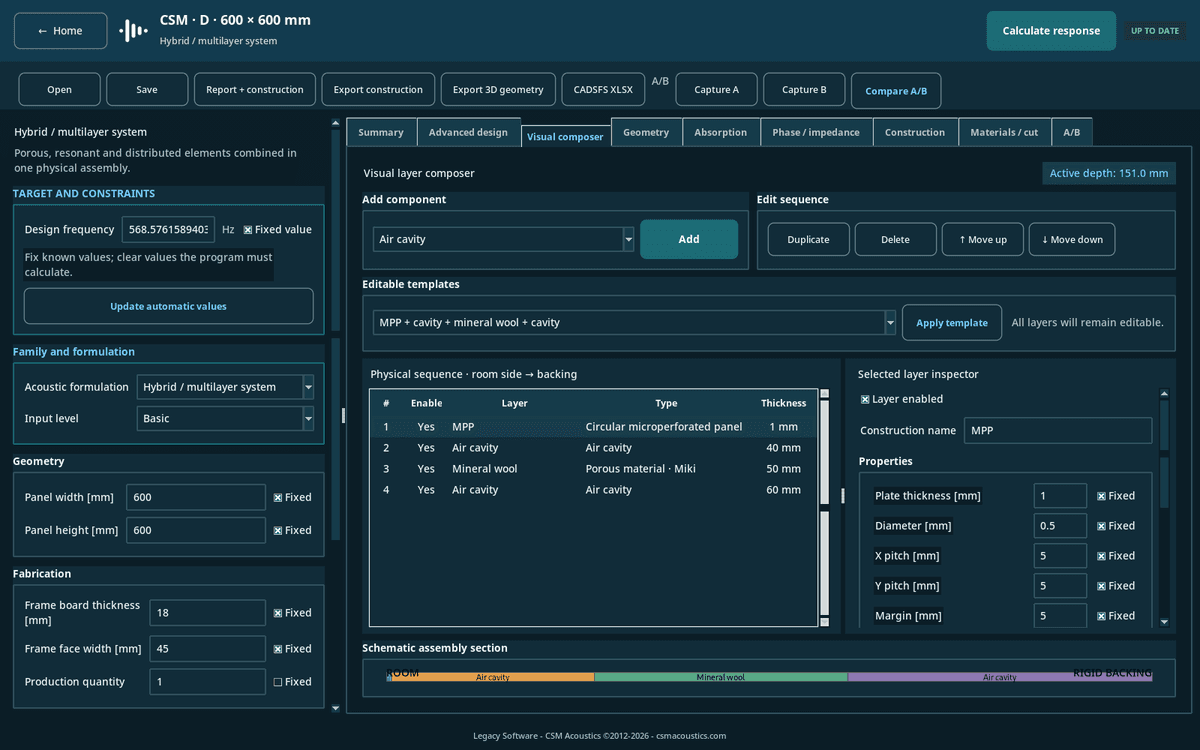
Visual compositor of hybrids
You build multilayer systems —air, porous, resistive screens, membranes, perforated fronts— by editing components, not matrices or code. Acoustics, 3D, thickness and materials all update together.
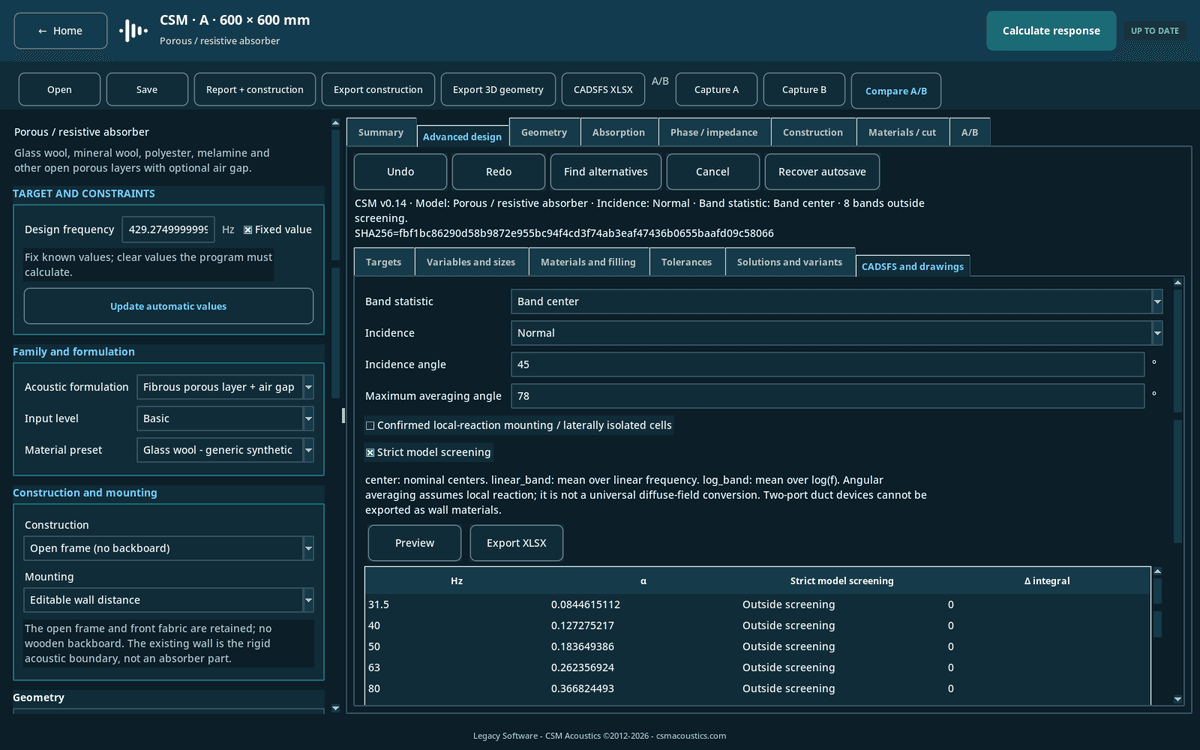
Interoperable with CADSFS and your CAD
It exports the sound-absorption properties as XLSX compatible with the CADSFS materials importer, with 27 one-third-octave bands. The same model feeds CAD, fabrication and room simulation.
Areas of use
Studios and home studios
Modal traps, early reflections, control rooms and live rooms — with real depth and budget constraints.
Theatres and auditoriums
Discreet treatments, integrated into the architecture and large surfaces.
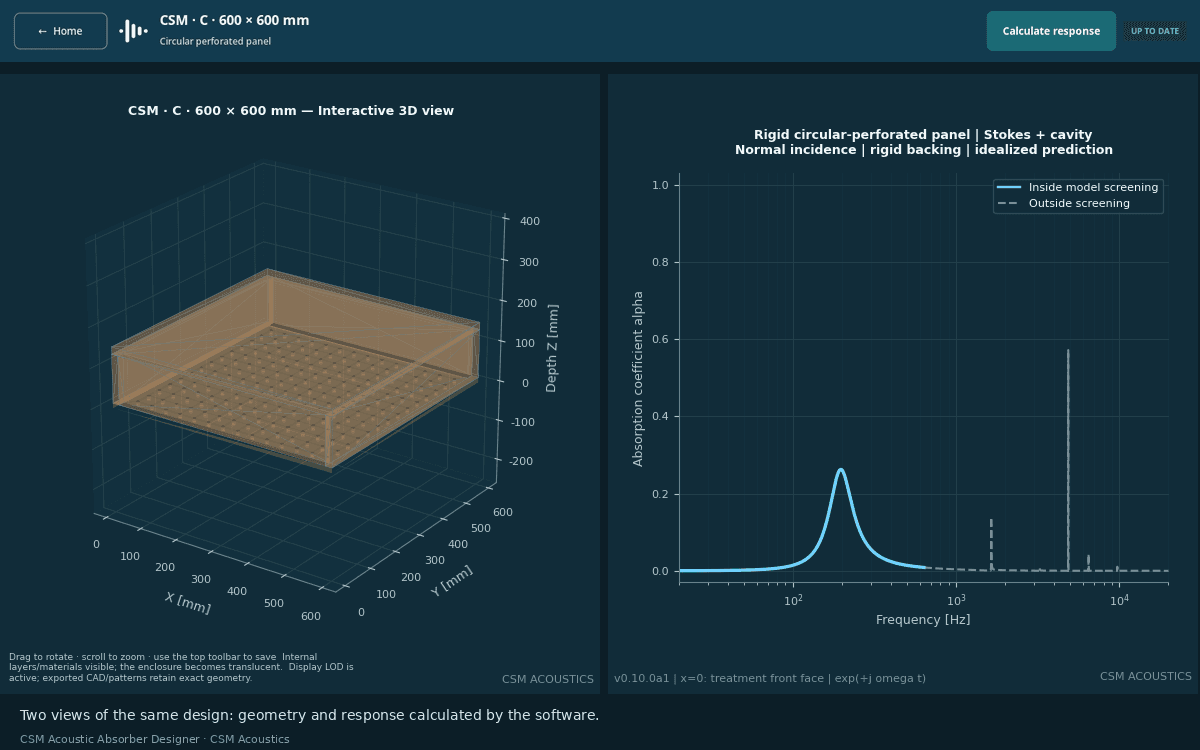
Classrooms and conference rooms
Reverberation and intelligibility control with porous or hybrid solutions.
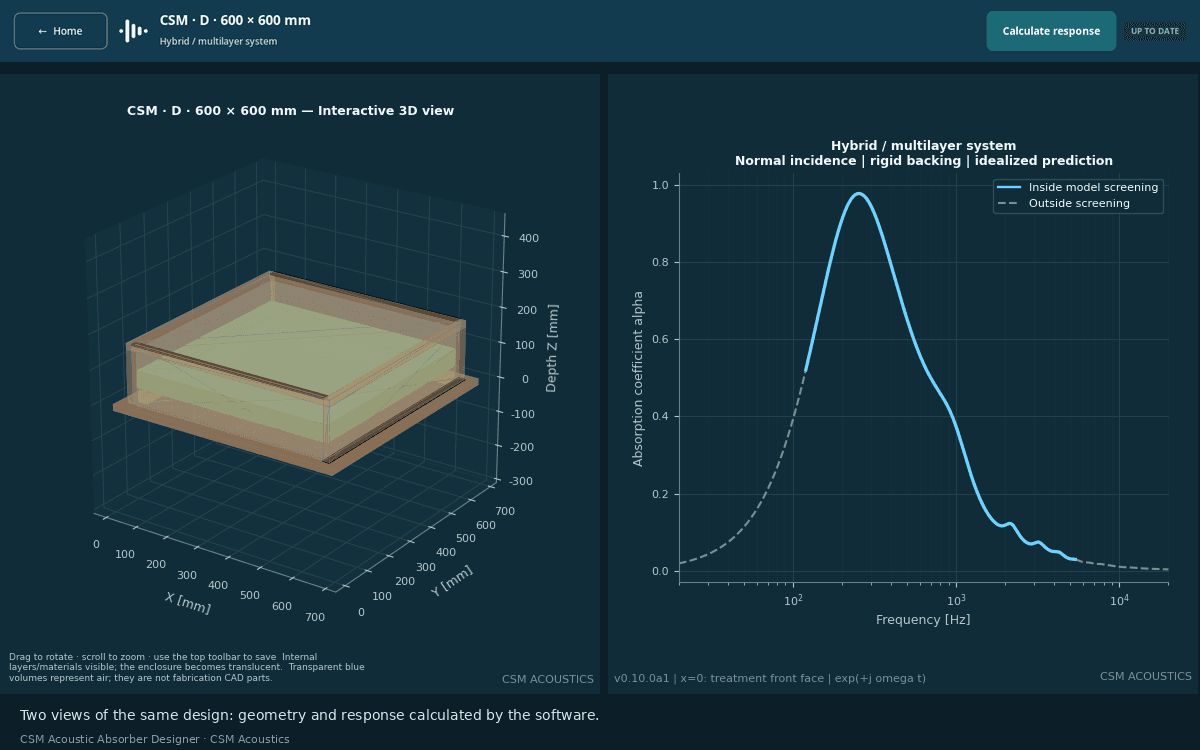
Cinema and broadcast
Broadband absorption and selective control in technical rooms.
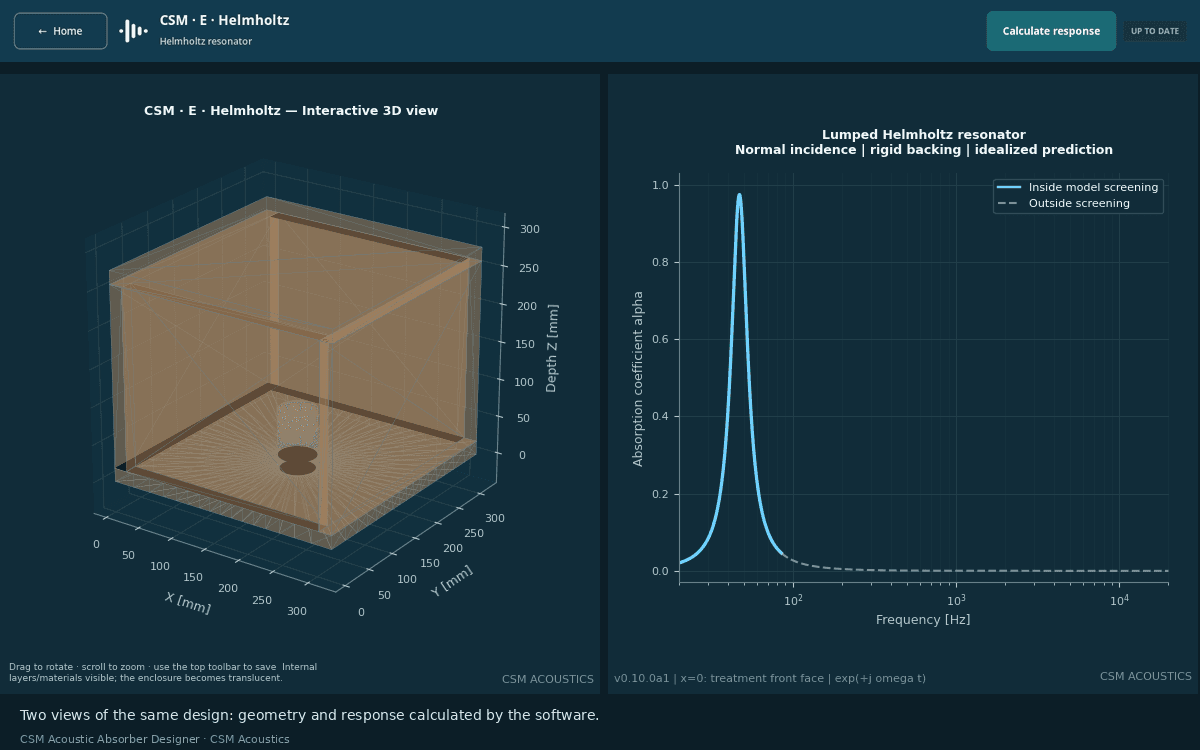
Industry, cabinets and HVAC
Resonators, linings and compact systems for tonal noise; half-wave and side-branch elements in ducts.
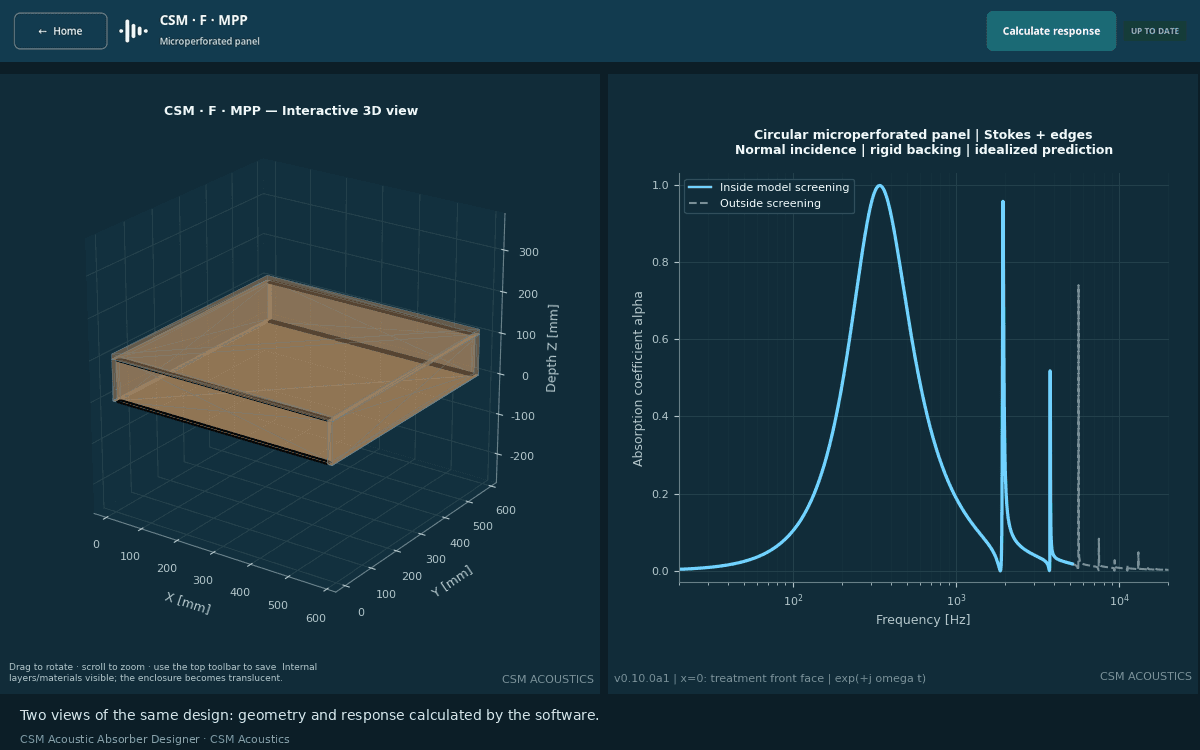
Product design
Panels, modules, acoustic furniture and repeatable prototypes —from a 600 × 600 mm module to a full system.